TL;DR
Backyard offices are changing how Vancouver homeowners work and build equity. Learn permits, costs, and what to build. Call CoreVal Homes: 604-200-2058.
A backyard office in Metro Vancouver almost always needs permits, and the ones that hold their value are built like small houses: insulated, wired, heated and ventilated. Most homeowners make their mistakes at the start.

They look for the cheapest quote. They skip getting permits. They pour concrete without knowing what their lot allows. Six months later, they have a structure that can't be legally used, insured, or counted toward property value.
This guide covers everything — zoning rules, permits, building standards, and how to build a backyard office that works well for you.
---
- Most backyard offices in Vancouver need permits. Skipping them causes legal and resale problems.
- A well-built office with proper insulation, electrical work and ventilation keeps its value. A garden shed does not.
- Vancouver's R1-1 zone and BC's Bill 44 have widened what many lots allow, so your lot may support more than you think.
- A quote far below the others is usually cutting corners you won't see.
- Hire a builder who knows your municipality's permit process. That removes delays and unexpected costs.
---
What Exactly Are Backyard Offices, and Why Are Vancouver Homeowners Building Them?
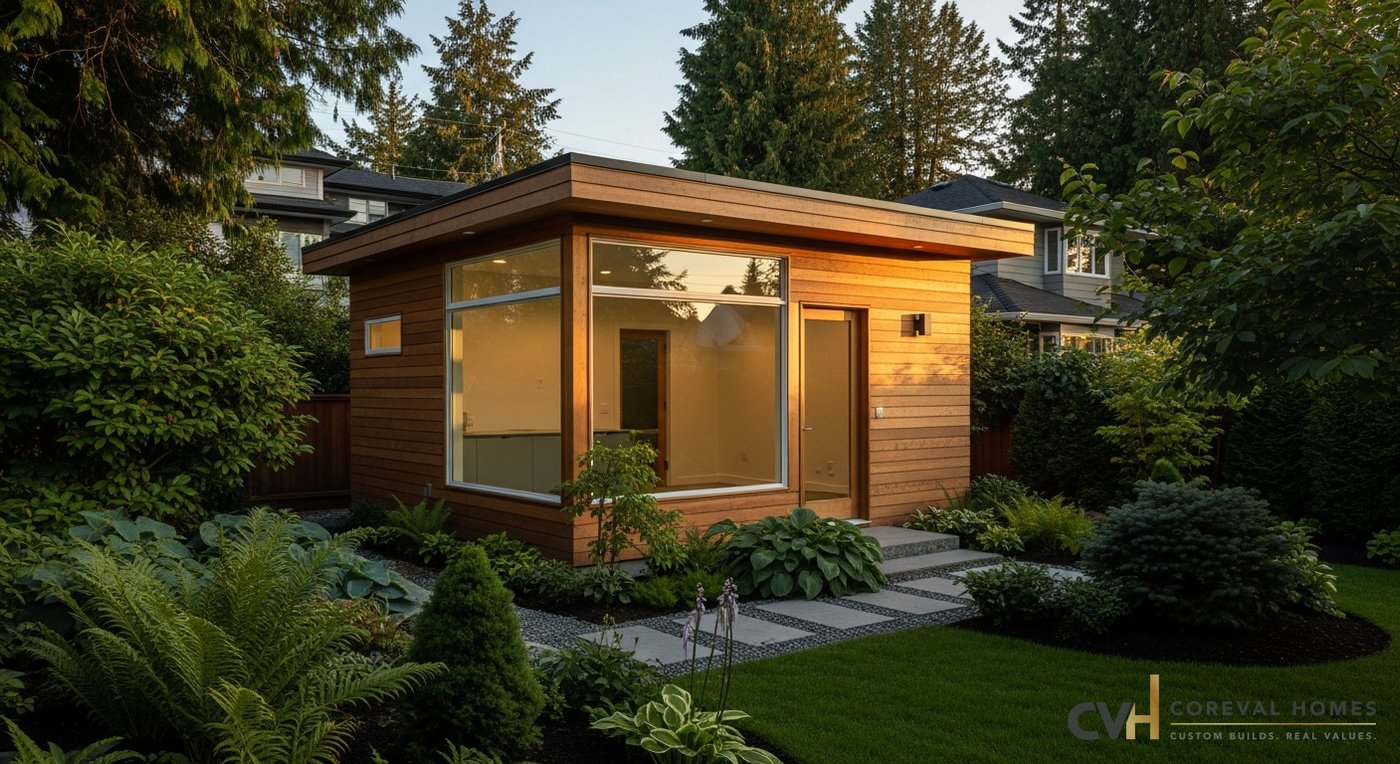
A backyard office is a separate workspace built on your property. It sits apart from your main home — usually at the back of the yard or in a laneway area.
It's not a converted shed. It's not a tent with internet. It's a real building with proper insulation, electricity, heating, and ventilation.
Demand grew after 2020. Statistics Canada's Labour Force Survey shows the share of Canadians working most of their hours from home rose from about 7% in January 2020 to about 40% in April 2020, then settled at about 20% by November 2023. For many households, that raised a practical question: where do you work when your home office is also your dining room, your kids' study space and your guest bedroom?
For many homeowners, a dedicated backyard office solved that problem, turning a request for more space into a real building that separates work from family life.
A quality backyard office solves several problems at once. It adds heated square footage to your property. It creates real separation between work and living. This separation is important for focus and family life. And in many cases, it becomes rental space when your needs change (subject to zoning rules and permits).
Even a small building needs quality construction. A backyard office built to code holds up and keeps its value; one built cheaply can fail early and add little to resale value.
---
Do You Need a Permit for a Backyard Office in Vancouver?
Yes. In almost every case in Metro Vancouver, you need a permit.
This is where many homeowners make their first big mistake. They assume a small building under a certain size doesn't need a permit. Sometimes they're right. Most often, they're not.
Here's what actually matters:
Size limits differ by municipality. In the City of Vancouver, accessory buildings are regulated under the Zoning and Development By-law, and even small ones must meet zoning, setback and electrical requirements. Burnaby and the District of North Vancouver have their own rules. Check your municipality's current zoning bylaw before assuming anything is permit-exempt.
Electrical work needs a permit. Running power to a backyard office requires an electrical permit, issued by Technical Safety BC or, in some municipalities, by the City, and the work should be done by a licensed electrical contractor.
Plumbing creates more requirements. Want a sink or bathroom in your backyard office? That's a separate permit. It may also change how your lot is classified. Many municipalities treat a building with plumbing differently from one with just electricity.
Zoning decides what's allowed. R1-1 lots in Vancouver have different rules than RT-10 or RM zones. Your lot's zoning decides the maximum lot coverage, height limits, and setbacks from property lines. You can check your zoning online through the City of Vancouver's zoning map (vancouver.ca/zoning-map) or Burnaby's GIS system. Know your zone code before you design anything.
Getting permits before construction starts protects your resale value, your insurance, and your legal right to use the space. If a builder says permits aren't necessary, that's a warning sign.
---
How Much Does It Cost to Build a Backyard Office in Metro Vancouver?
Everyone asks this question first. Usually, it's the wrong question.
The right question is: what does it cost to build something that lasts, passes inspection, and adds real value to your property?
Construction cost depends on size, finish level, foundation type and site conditions, so the reliable number comes from a quote for your lot.
Here's what affects price:
Foundation costs vary with soil conditions, and poor soil may need a deeper foundation and a site-specific engineering review. Heating and cooling, often a ductless mini-split, and the finish level are the other big variables.
Here's the reality: a quote far below the others is usually cutting something you can't see during construction. A vapour barrier isn't visible once walls are closed, and in Vancouver's wet climate a poor one leads to moisture problems that cost far more than building it right.
A credible builder includes contingency in their estimate. Not because they're inexperienced — because every project has unknowns. Soil conditions differ between survey points. Underground utilities aren't always where old records say. Permit changes may come up during review. The builder with the lowest number and zero contingency is the one who calls you halfway through with a surprise invoice.
Expect the budget conversation to be honest and detailed. If a builder can't explain where money is going, that's a problem.
---
What Building Standards Apply to Backyard Offices in BC?
BC follows the BC Building Code (2024). This code is based on the National Building Code of Canada with BC changes. For accessory structures used as living space — meaning heated, occupied regularly, and with electrical service — specific standards apply.
Here's what proper construction requires for a backyard office:
Insulation: A heated, occupied accessory building has to meet the insulation requirements for its climate zone under the BC Building Code, or the Vancouver Building By-law in Vancouver. Going beyond the minimum in the walls is usually inexpensive during framing and pays back in comfort and heating costs. Check your municipality's building department for current requirements.
Vapor control: A proper continuous vapor barrier is essential. In Vancouver's wet climate, skipping this step is a disaster. It surfaces later as mould and structural damage. Polyethylene sheeting (6-mil minimum) installed on the warm side of the wall cavity is standard.
Electrical: Minimum panel sizing, outlet spacing, and ground fault protection in wet areas — all governed by the Canadian Electrical Code Part I. Electrical inspections are mandatory. A licensed electrician signs off. Your local authority issues a final inspection report.
Ventilation: Occupied spaces need mechanical ventilation under the BC Building Code. This isn't optional in a sealed, insulated structure. You need continuous mechanical exhaust or balanced heat recovery ventilation.
Exits: Occupied buildings need safe exits, and if the space may ever include a bedroom, bedroom windows have minimum opening sizes under the BC Building Code. Plan for that now if you might convert later.
Foundation: Options include concrete slab-on-grade, helical piers, or grade beam. Each has structural requirements depending on soil capacity and site conditions. A soil engineer's report is often required. This is particularly important in areas with poor drainage or high water tables. These are common in Vancouver's lower neighborhoods.
Buildings that don't meet these standards lose property value. They can't be insured. They can't be sold easily. A builder who checks every requirement before construction — visiting the lot, understanding soil and drainage, checking actual zoning, and setting clear expectations — protects your investment.
---
How Does a Backyard Office Differ from a Laneway Home in Vancouver?
This question comes up often. The distinction matters — legally and financially.
A backyard office is an accessory structure used for non-residential purposes. No sleeping area, no kitchen, no full bathroom. It's classified as a secondary accessory building under Vancouver's zoning bylaw. It's for workspace, studio, or workshop.
A laneway home (or secondary suite) is a full dwelling unit. It has sleeping, living, cooking, and bathing. In the City of Vancouver, laneway houses are governed by the Laneway House Program. This program specifies design standards, lot size requirements, and density limits. Burnaby and North Vancouver have equivalent secondary suite policies.
The distinction matters:
- Rental income potential: A laneway home can be rented as residential. A backyard office used as workspace cannot (directly) generate tenant income. However, a backyard office built with future rental capacity in mind can be upgraded later more cheaply. Add rough-in for plumbing and egress windows.
- - Design and code requirements: A laneway home must meet the full requirements for a dwelling unit. A backyard office used for non-residential purposes has fewer requirements.
- Value recognition: BC Assessment evaluates laneway homes as separate dwelling units. This can increase assessed value. A backyard office adds utility value but may not be recognized as separate in assessment.
Some homeowners start with backyard office plans and later discover their lot qualifies for something larger. A structure designed with future rental use in mind can make that conversion easier.
If you want to know whether your lot qualifies for a laneway home or a hybrid structure, get a site-specific zoning review before you design.
---
What Are the Best Design Features for a Functional Backyard Office?
A backyard office that looks good online and a backyard office that works every day are different things.
Here's what the functional ones have in common:
Orientation and Natural Light
Orientation matters. Windows facing south or east bring in more natural light, which helps focus and mood and adds passive solar gain in winter. Plan window placement around how the sun crosses your yard.
Insulation Beyond Code Minimum
The code minimum is a floor, not a target. Upgrading wall insulation, for example by moving from 2x4 to 2x6 framing, adds little cost at framing and pays back in comfort and heating bills.
Dedicated Electrical Panel
A sub-panel in the backyard office — not just a single 15-amp circuit from the main house — gives flexibility. You can add task lighting, multiple monitors, heating, and EV charging later without rewiring. Adding it later costs more than doing it now.
Sound Attenuation
If you're taking client calls or doing focused work, sound matters. Acoustic batts in wall cavities and an exterior door with proper weatherstripping (triple-seal minimum) keep outside noise out. This is inexpensive at framing stage and expensive to retrofit.
Separated HVAC
A ductless mini-split gives you independent temperature control. You're not heating the backyard office when no one's using it. You're not fighting the main house thermostat when you are. Comfort improvement: significant. In Vancouver's variable spring and fall weather, independent climate control is practical.
Covered Entry
Vancouver gets a lot of rain. A covered entry or vestibule keeps you dry between the house and the office. Small detail, daily impact, and far cheaper to build now than to add later.
Future-Proofing
Rough-in for a bathroom (drain stub, vent stack) while walls are open. Run conduit for future data lines and electrical runs. Add a floor drain in the utility area. These add a little cost now and save a lot if your needs change and you need to retrofit.
Skipping these features during construction often costs more in retrofits later than it saved.
---
How Does Vancouver's Densification Policy Affect Backyard Office Projects?
Vancouver is actively reshaping residential zoning. This matters for backyard office projects directly.
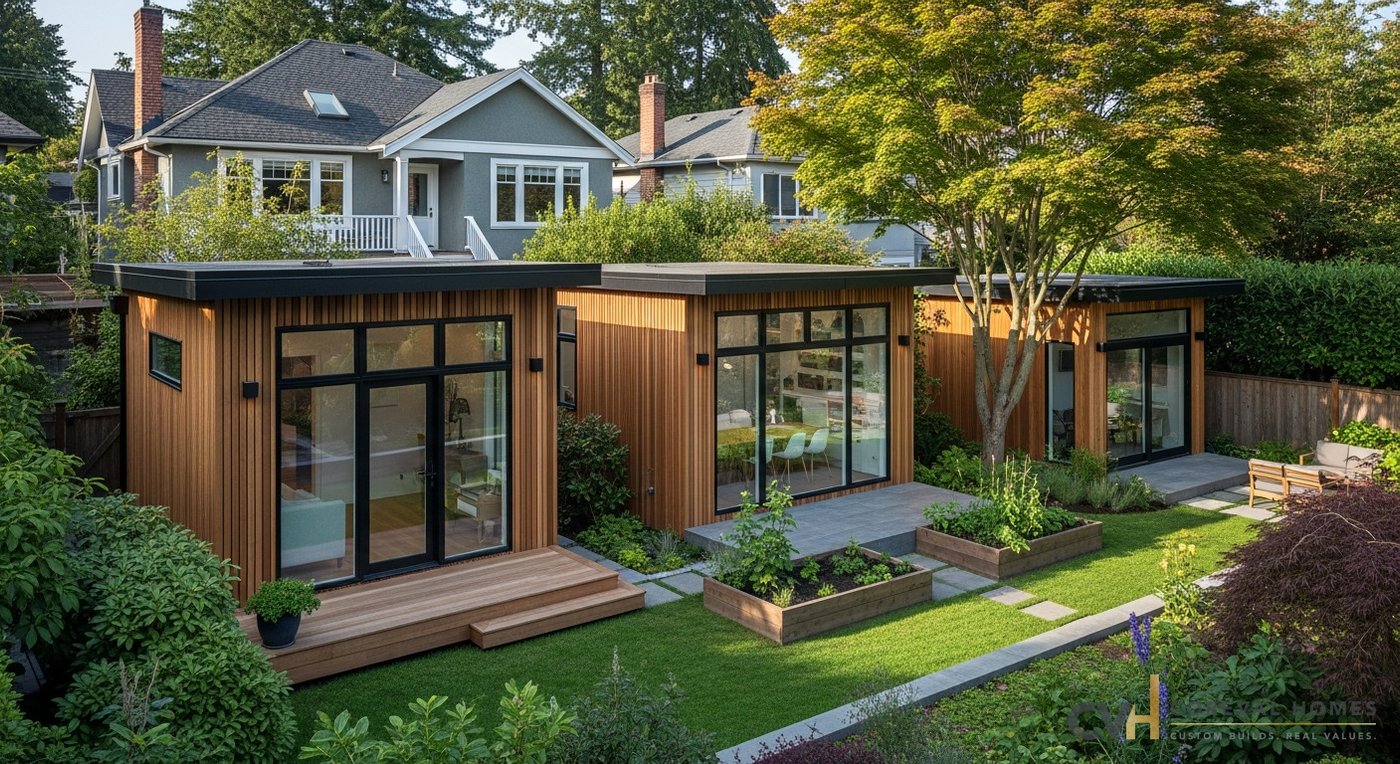
In 2023 the City of Vancouver replaced its RS zones with the R1-1 Residential Inclusive zone, and the Province passed Bill 44 on small-scale multi-unit housing. Together, those changes give many lots more options than they had before.
What this means practically:
- - More housing options on many lots: lots that couldn't support a secondary suite before may now qualify for more.
- - Hybrid structures: some homeowners design an office that can later become part of a dwelling, subject to zoning, design review and permits.
Zoning policy is changing quickly. A builder or planner who tracks zoning changes is valuable. They understand how updated bylaws affect your specific lot. Zoning windows can close if you don't act with current information. Or they open suddenly if policy shifts in your neighborhood.
Zoning updates can change what a lot allows in the middle of a project, in either direction, so check the current bylaw before you commit to a design.
---
What Should You Look for When Hiring a Builder for Your Backyard Office?
This is where most homeowners make the expensive mistake.
They get three quotes. They pick the lowest one. They discover six months later why it was the lowest.
Here's what to actually evaluate:
Permit history. Ask the builder how many permits they've pulled in your municipality in the last 24 months. Ask for specific examples — actual projects they've completed in Burnaby, the City of Vancouver, or your neighborhood. A builder with direct, recent permit experience in YOUR city knows current requirements. They know inspectors, approval timelines, and what triggers additional review.
Permit coordination. Does the builder handle permit applications and inspections directly, or do they outsource or leave it to you? Direct coordination removes communication gaps that cause delays.
Contingency inclusion. A builder who doesn't include contingency in their estimate is either inexperienced or hiding the real number. Ask directly: "Is there a contingency built in, and what percentage?" For reference, CMHC's Housing Design Catalogue cost guidance advises carrying a 5% to 10% hard-cost contingency, and complex sites justify the top of that range.
Communication cadence. Ask how often they check in during construction: weekly calls, written updates, regular site photos. Regular check-ins keep small issues from becoming big ones.
References from similar projects. A builder who has completed 40 custom homes in Burnaby has different knowledge than one doing their first accessory structure. Ask for references from projects like yours. Ask about them being in your neighborhood or with similar lot sizes. Call them. Ask about timeline, budget variance, and permit experience.
Site visit before quoting. Every lot is different. Soil conditions, drainage patterns, existing utility locations, tree roots, proximity to neighbors — these affect foundation design and cost. A builder who quotes without visiting your lot is guessing.
The pre-construction process matters as much as construction itself. A builder who visits the lot, reviews zoning fully, discusses contingency openly, and sets the right expectations from day one removes surprises later.
---
What Are the Common Mistakes Vancouver Homeowners Make With Backyard Office Projects?
We see consistent patterns across projects that struggle. Here's what to avoid:
Building without permits. This doesn't save money. It can mean fines, orders to remove the structure, lost resale value and insurance complications at the time of sale.
Underinsulating for Vancouver's climate. Vancouver isn't dry and hot. Damp cold penetrates poorly insulated structures. Mold follows. The cost of proper insulation at construction stage is a fraction of remediation cost later.
Treating it like a shed project. A backyard office where you spend 40+ hours per week is not a storage structure. It needs good lighting for actual work (500+ lux for detailed work). It needs electrical capacity for real equipment (dedicated circuits for monitors, charging, heating). It needs thermal comfort that doesn't require a space heater or AC unit in every season. Too many homeowners build something that "works" but isn't actually comfortable or functional as a real workspace.
Ignoring setback requirements. Vancouver's zoning by-law sets minimum distances from property lines for accessory buildings, and building without checking them can mean forced removal.
Choosing materials for looks only. Cedar siding looks beautiful, but it needs regular maintenance. Composite cladding offers long-term durability with less upkeep. Choose the right material for the application, not just the photo.
Skipping the site visit. Every lot is different. A builder who quotes without understanding your specific lot conditions is guessing on cost and feasibility.
---
FAQ: Backyard Offices in Vancouver
1. Can I build a backyard office on any residential lot in Vancouver?
Not automatically. Your lot's zoning classification decides whether accessory structures are permitted. It also decides how large they can be and how far they must sit from property lines. R1-1, RT and RM zones all have different rules. You can check your zoning using the City of Vancouver's zoning map (vancouver.ca/zoning-map). The City's zoning amendments in 2023–2024 have expanded what's possible on many lots. A site-specific zoning review is essential before assuming anything is allowed. A zoning consultation with a planner can uncover options that aren't obvious from the bylaw alone.
2. How long does the permit process take for a backyard office in Vancouver?
Permit timelines vary by municipality and by how complex the application is. Applications that need zoning review, heritage review or neighbour notification take longer. A builder with direct permit experience in your municipality can set expectations accurately and refine plans before submission to reduce review cycles.
3. Will a backyard office increase my home's assessed value?
It can. BC Assessment values property as land plus improvements, and a permitted, quality-built accessory structure is part of the improvements. An unpermitted structure can create problems at the time of sale. Building to permit standards protects that value.
4. Can a backyard office be converted to a rental suite later?
Potentially, yes, but it requires additional permits and has to meet the BC Building Code requirements for a dwelling unit. If you're considering this path, tell your builder before construction. Roughing in plumbing and planning window openings during the initial build costs far less than retrofitting later.
5. What's the difference between a prefab backyard office and a site-built one?
Prefab backyard offices (modular or panelized units) offer faster installation. Typically 1–3 weeks on-site. But they come with limitations. Fixed sizes, limited customization, and varying compliance with BC Building Code requirements. Some prefab units sold online aren't certified to Canadian electrical standards or designed for BC's building code, so check before you buy. Site-built structures are engineered for the specific lot. They're built to local code and fully permit-compliant. For a short-term workspace (1–2 years), prefab may suit some needs. For a structure that adds lasting property value and functions comfortably over 15–20 years, a site-built approach built to Vancouver-specific standards is the stronger choice.
---
Next Steps
You now understand what the permit process looks like. You know what building standards apply. And you understand what separates a quality build from a cheap one that costs more in the end.
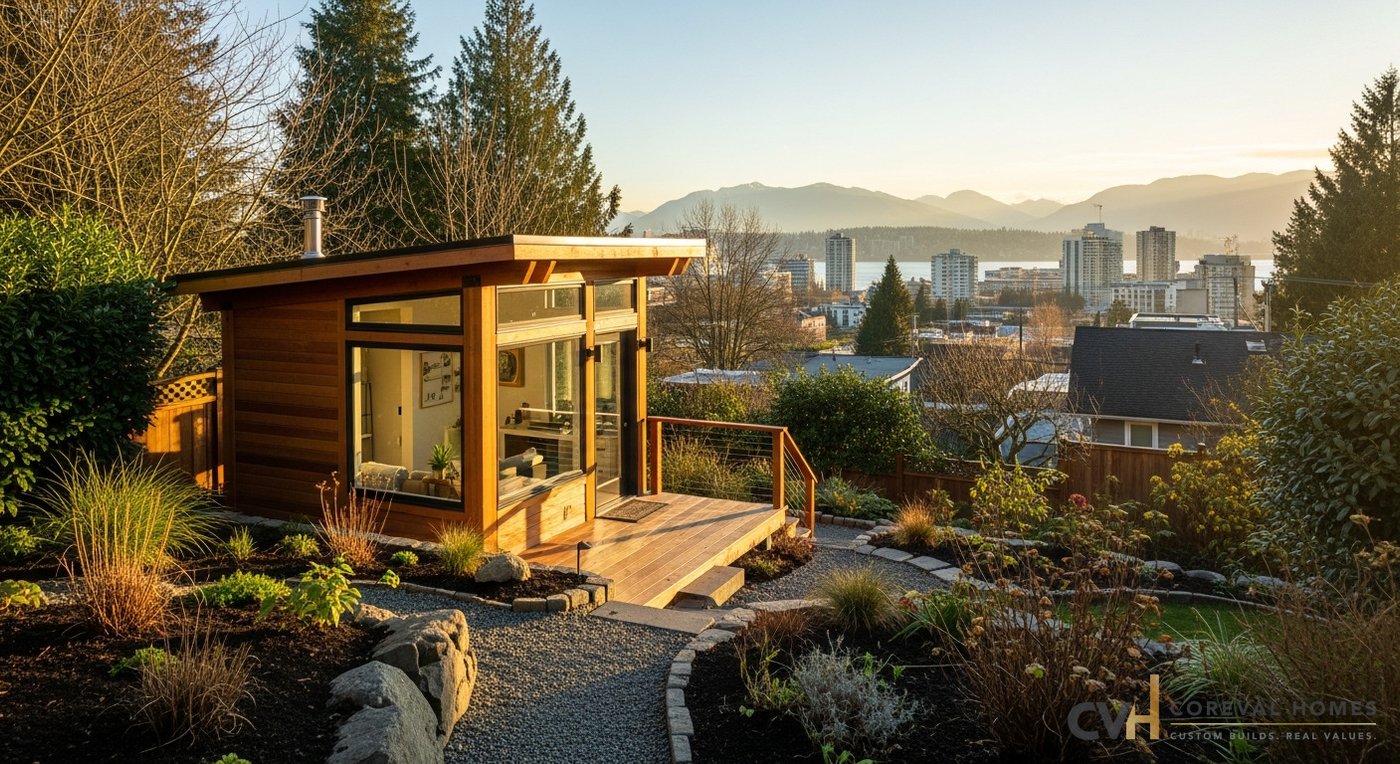
The next step is finding a builder with direct experience in your municipality: someone who has pulled permits on lots like yours, understands current zoning and visits your property before giving advice. CoreVal Homes builds backyard studios and laneway homes across Metro Vancouver, and you can book a consultation to talk through your lot.
---
Test Your Knowledge
1. According to Statistics Canada, about what share of Canadians worked most of their hours from home in November 2023?
- A. Approximately 1 in 10
- ✅ B. Approximately 1 in 5
- C. Approximately 1 in 3
- D. Approximately 1 in 2
Statistics Canada's Labour Force Survey data show about 20% of Canadians worked most of their hours from home in November 2023, down from about 40% in April 2020.
2. Which part of a backyard office build needs its own permit even when the building is small?
Electrical work. Running power to the building needs an electrical permit, issued by Technical Safety BC or, in some municipalities, by the City.
3. Name two reasons why homeowners in Metro Vancouver are building backyard offices.
Homeowners are building backyard offices to add heated square footage to their property and to create separation between work and living spaces. Additionally, in some cases, they become rental space when homeowner needs change.
Enjoying our articles? Stay informed on real estate & development.
Make us your preferred source on Google