
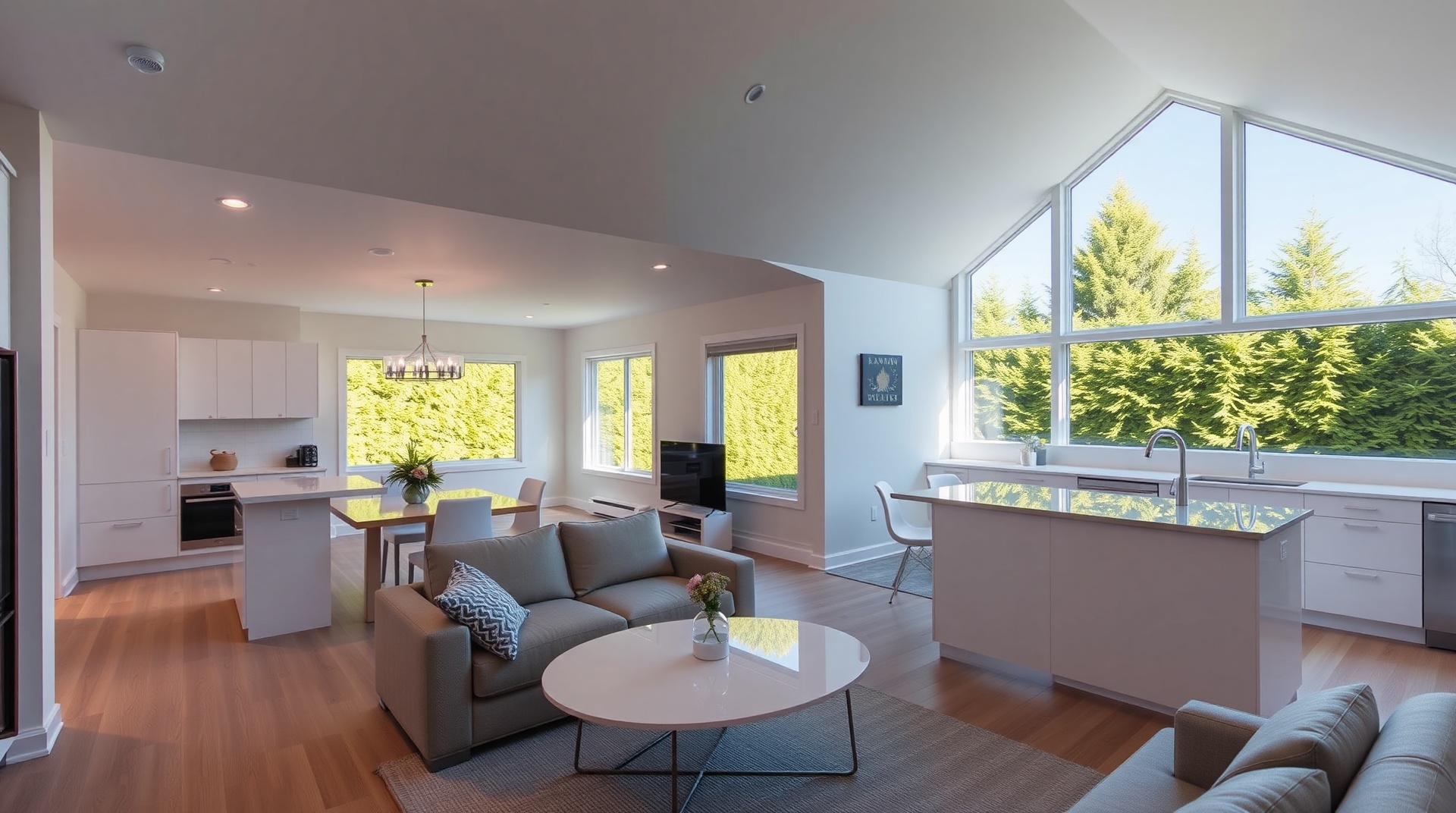
Secondary Suite Contractor Vancouver
Legal secondary suites built right — permits, code compliance, and quality construction that passes inspection the first time.
CoreVal Homes is a BC Housing-certified contractor specialising in legal secondary suites across Metro Vancouver, registered under the Homeowner Protection Act.
Last reviewed: April 2026 · Metro Vancouver
What Makes a Secondary Suite ‘Legal’ — The Full Technical Requirements
Legal compliance is not a marketing phrase — it is a specific checklist of building code and bylaw requirements. Every item below must be satisfied before the City of Vancouver issues a final occupancy sign-off. Many suites advertised as “renovated” or “in-law” suites do not meet these standards and cannot legally be rented as a separate dwelling.
Requirements are from City of Vancouver Building Bylaw and BC Building Code as of 2026. Other Metro Vancouver municipalities follow similar standards with some variations. Confirm current requirements with your municipality or licensed builder.
Suite Types We Build
Every suite type fully permitted, code-compliant, and built to CoreVal standards.
Basement Suite
Full conversion of existing basement or new excavation — separate entrance, egress windows, legal ceiling heights, and proper fire separation.
Carriage House
Detached dwelling unit built over or beside a garage structure. Separate address, full utilities, and independent entrance.
Laneway Suite
Self-contained laneway dwelling with lane access. Ideal for rental income or multigenerational living on qualifying lots.
Above-Garage Suite
Convert unused space above your attached or detached garage into a legal suite with proper insulation, plumbing, and egress.
Secondary Suite Costs — 2026 Metro Vancouver Market Breakdown
Cost varies most significantly by whether the existing basement meets legal ceiling height requirements, and whether existing plumbing rough-ins are in place. The table below reflects current Metro Vancouver construction market rates.
| Scenario | Scope | Metro Vancouver Market Range |
|---|---|---|
| Basic basement conversion | Existing rough-ins, standard ceiling height, standard finishes | $75,000–$120,000 |
| Basement conversion (low ceiling) | Requires underpinning or excavation to achieve legal height | $130,000–$210,000 |
| New suite (unfinished basement) | Full build from concrete slab, no existing finishes | $95,000–$155,000 |
| Above-garage conversion | Structural reinforcement typically needed for floor loading | $85,000–$160,000 |
| Carriage house (new construction) | Fully detached, new build over garage or from grade | $180,000–$320,000 |
Metro Vancouver construction market rates as of 2026. Excludes site-specific costs such as panel upgrades, city-required upgrades to the primary structure, and utility connections. All ranges include permits, design, and construction.
The Business Case: Secondary Suite ROI in Metro Vancouver
The financial case for building a legal secondary suite in Metro Vancouver is among the strongest in Canada, driven by a rental vacancy rate that remains below 1.5% and among the highest average rents for basement suites nationally.
Rental Income Projection
Average basement suite rental in Metro Vancouver: $1,800–$2,600/month (2026 CMHC rental market data)
Annual rental income at midpoint ($2,200/month): $26,400/year
Build cost amortised over 10 years (at $100,000): $10,000/year
Net income after amortisation: ~$16,000/year before operating expenses
At a $130,000 build cost, the payback period is approximately 5–6 years at $2,200/month — before accounting for property value uplift.
Property Value Increase
Metro Vancouver appraisers typically add 60–80% of suite build cost to assessed value. On a $120,000 build, that translates to $72,000–$96,000 in added assessed value — in addition to the rental income stream. Properties with permitted legal suites consistently achieve higher sale prices than comparable homes without, reflecting the income potential buyers are acquiring.
Mortgage Qualification Benefit
Under CMHC’s rental income program, borrowers can use up to 100% of confirmed rental income toward mortgage qualification. For a homeowner earning $2,200/month from a basement suite, this adds approximately $26,400/year to their qualifying income — meaningfully increasing purchasing power when buying a property or refinancing.
Why a Legal Secondary Suite Pays for Itself
- Rental income of $1,800–$2,800/month covers most or all of your mortgage payment in Metro Vancouver.
- A legal suite adds $80,000–$150,000 to your assessed property value — often more than the build cost.
- Qualify for a larger mortgage using rental income projections under CMHC secondary suite guidelines.
Ready to Build a Legal Suite?
Book a free site visit. We will confirm your lot eligibility, review suite options, and provide a realistic cost estimate before you commit to anything.
Get a Suite QuoteSecondary Suite FAQs
What makes a secondary suite 'legal' in Vancouver?
A legal secondary suite meets the City of Vancouver's zoning and building bylaw requirements: proper ceiling heights (minimum 1.9m), separate entrance, egress windows in bedrooms, smoke and CO detectors, fire separation between units, and a building permit. CoreVal handles all of this — we build to legal standards and pull the permit on your behalf.
How much does a secondary suite cost in Vancouver?
Secondary suite costs in Metro Vancouver typically range from $80,000–$180,000 depending on scope, existing conditions, and finishes. A basic basement suite conversion with existing plumbing rough-ins will run less than a new suite requiring full excavation. We provide a detailed cost breakdown after an on-site assessment.
Can I build a suite in my basement?
Most properties in Metro Vancouver are now eligible for a secondary suite under BC's SSMUH legislation (2024). Eligibility depends on your lot size, existing structure, ceiling height, and municipal requirements. Contact CoreVal for a free site assessment — we will confirm your eligibility and walk you through the options.
How long does it take to get a secondary suite permit in Vancouver?
The City of Vancouver typically processes secondary suite building permits in 8–14 weeks from a complete application. Incomplete applications are the most common cause of delays — missing engineer schedules, insufficient drawings, or outstanding zoning questions all trigger revision requests. CoreVal prepares complete permit packages with all required drawings, engineer schedules, and specifications to reduce back-and-forth with the city.
Is a secondary suite allowed in all Vancouver zones?
Under BC's SSMUH legislation (2024), secondary suites are now permitted on most single-family (RS) zoned lots throughout Metro Vancouver. Prior to 2024, Vancouver allowed suites in specific RS sub-zones only. A small number of zone exceptions remain. Your builder should confirm your specific lot's eligibility through a zoning confirmation before design begins.
Can I charge market rent for a legal secondary suite?
Yes. A legal secondary suite in Metro Vancouver has no mandated rent restrictions (unlike some social housing programs). You set the rent at market rates. BC's Residential Tenancy Act applies to all suites — familiarise yourself with notice periods, annual rent increase rules (currently CPI-based), and tenant rights before renting. Metro Vancouver basement suite rents average $1,800–$2,600/month as of 2026.
What is the difference between a secondary suite and a laneway home?
A secondary suite is a self-contained unit within or attached to the existing building — typically a basement suite or an above-garage suite. A laneway home is a fully detached dwelling built on the same lot, usually at the rear with lane access. Laneway homes are generally larger, more expensive ($250K–$550K), have their own address, and generate higher rental income. Secondary suites are typically lower cost ($75K–$180K) and less disruptive to build. Both are now permitted on most Metro Vancouver single-family lots under SSMUH.
CoreVal Homes — Built to a Higher Standard. Serving Metro Vancouver & the Fraser Valley. See everything we build on the CoreVal Homes homepage.