
TL;DR
Cabinet refacing Vancouver cost guide for 2026. Real stats on pricing, timelines, ROI, and how it compares to full kitchen renovation. Free assessment.
You're standing in your kitchen. The layout works. The cabinet boxes are solid. But every time you look at those oak doors from 2004, or that peeling thermofoil that's been bugging you for three years, you think: *something has to change.*
And then you start Googling. Full kitchen renovation? $35,000 to $85,000. Weeks without a functioning kitchen. Permits. Trades. Dust everywhere.
There's a faster way. Cabinet refacing in Vancouver gives you a brand-new kitchen look, new doors, new drawer fronts, new hardware, new finishes, without ripping out what already works. You keep your cabinet boxes. You skip the demolition. And you save a serious amount of money.
But is it the right call for *your* kitchen? That depends on a few things most websites won't tell you.
TLDR, 5 Key Takeaways
>
1. Cabinet refacing in Vancouver typically costs 40-60% less than full cabinet replacement, with industry averages ranging from $8,000 to $24,000 depending on material and kitchen size (Vancouver General Contractors, 2026).
2. Most refacing projects are completed in 3-5 days on-site, compared to 6-12 weeks for a full kitchen renovation (180 Kitchens, 2025).
3. A minor kitchen remodel with refacing delivers an average ROI of 75-80% at resale, outperforming major upscale remodels that return only 36-51% (Zonda Cost vs. Value Report, 2025).
4. Refacing diverts roughly 950 pounds of cabinet materials per kitchen from Metro Vancouver landfills (Cabinet Now, 2025).
5. No building permit is required, cabinet refacing is classified as a cosmetic upgrade under the BC Building Code, meaning zero permit wait times.
What Exactly Is Cabinet Refacing, and What Gets Replaced?
Let's clear up the confusion right away. Cabinet refacing is not painting. It's not refinishing. And it's definitely not a full gut-and-replace job.
Here's what happens during a professional cabinet refacing project:
- Old doors and drawer fronts come off. Every single one.
- New veneer or laminate gets applied to the visible face frames and side panels of your existing cabinet boxes.
- Brand-new doors and drawer fronts are installed in your chosen material, colour, and style.
- New hardware goes on hinges, handles, pulls, soft-close mechanisms.
- Optional upgrades get added: crown moulding, end panels, pull-out shelves, lazy Susans, interior organizers.
The structural cabinet boxes, the parts bolted to your walls, stay exactly where they are. That's the whole point. If those boxes are solid (no water damage, no warping, no soft spots), there's no reason to tear them out.
The result? A kitchen that looks like you dropped $40,000 on new custom cabinets. At roughly half that number.
Here's the critical distinction most comparison articles miss: refacing replaces every visible surface a buyer or guest would notice. Doors. Drawer fronts. Hardware. Face frames. End panels. The only thing that stays is the skeleton behind the walls, the part nobody sees.
How Much Does Cabinet Refacing Cost in Metro Vancouver Right Now?
Let's talk real numbers. Not vague ranges. Not "it depends" without any figures.
According to Vancouver General Contractors' 2026 pricing guide, here's what cabinet refacing costs in Metro Vancouver by material type:
Material | Cost Range
Thermofoil (vinyl-wrapped MDF) | $8,000 - $14,000
Painted MDF doors | $9,000 - $16,000
Solid wood doors | $14,000 - $22,000
For comparison, full custom cabinet replacement in Vancouver runs $22,000 to $100,000 for the same kitchen (Vancouver General Contractors, 2026).
A 2026 pricing guide from SmartReno4U reports that most Vancouver kitchen renovations, including cabinets, countertops, flooring, and appliances, land between $35,000 and $85,000 (SmartReno4U, 2026).
That means refacing delivers a visual transformation at roughly 25-40% of the cost of a full renovation. For a lot of Vancouver homeowners, that math is hard to argue with.
*These figures are based on Vancouver General Contractors and SmartReno4U market data and represent industry averages. Actual costs vary by kitchen size, materials, and scope. Contact CoreVal Homes for a personalized assessment.*
What Drives the Price Up or Down?
Five factors control your final number:
- Kitchen size and door count. A galley kitchen with 12 doors costs less than a U-shaped layout with 30 doors and an island. Simple math, more doors, more material, more labour.
- Door material and style. A flat-panel Shaker door in thermofoil is the most affordable option. A raised-panel solid maple door with a custom stain is the most expensive. The spread between those two options can be $8,000+.
- Veneer type for face frames. Rigid thermofoil is budget-friendly. Real wood veneer is mid-range. A paint-grade finish with professional spray application is the premium tier.
- Add-ons. Crown moulding, light valances, glass-insert doors, pull-out organizers, soft-close upgrades, each one adds $200-$800 per cabinet.
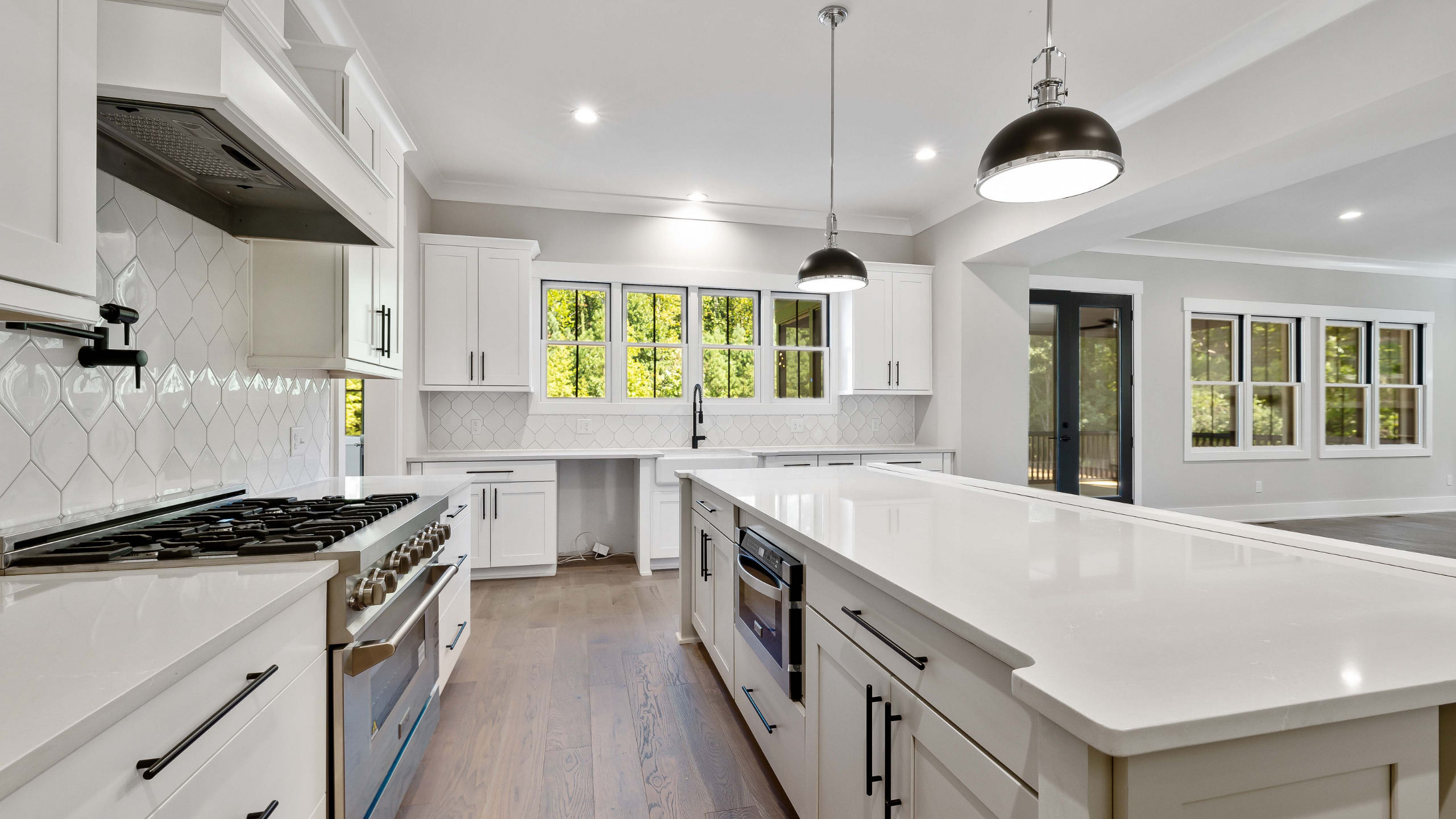

- Countertop and backsplash bundling. Many homeowners pair refacing with new quartz countertops and tile backsplash. This pushes total project costs into the $20,000-$28,000 range, but the combined visual impact is dramatically higher than cabinets alone.
How Long Does a Cabinet Refacing Project Actually Take?
This is where refacing wins by a mile.
According to 180 Kitchens (2025), most cabinet refacing projects in Vancouver are completed in 1-4 days of on-site work. Cabinnova Kitchens reports similar timelines, "in and out in a couple of days" for standard projects.
Here's the full timeline from first call to finished kitchen:
Phase | Duration
Initial consultation and measurement | 1-2 hours on-site
Design selection and material ordering | 2-4 weeks
On-site installation | 3-5 days
Total project timeline | 4-6 weeks
Now compare that to a full kitchen renovation in Vancouver. According to YVR Construction's 2025 timeline guide, a mid-range kitchen renovation takes 4-6 weeks of construction alone and a full gut-and-rebuild runs 10-16 weeks when you include custom cabinet fabrication lead times.
But here's the number that really stings: permits in Vancouver can add 8-12 weeks before any demolition starts (Walker General Contractors, 2026). So a full renovation's real timeline is often 5-7 months from first call to finished kitchen.
With refacing? No permits needed. No demolition. No drywall dust. Your kitchen stays functional through most of the process.
Does Cabinet Refacing Actually Increase Your Home's Value?
Yes. And the data backs it up.
The Appraisal Institute of Canada reports that a kitchen renovation delivers an ROI of 75-100% of what you spend (Appraisal Institute of Canada). The institute also recommends that homeowners set aside 10-15% of their home's value for a kitchen renovation budget, suggesting kitchens are one of the highest-return improvements you can make.
The 2025 Zonda Cost vs. Value Report found that a minor kitchen remodel, which includes cabinet refacing, delivers 112.9% ROI nationally, making it the highest-return interior home improvement project in North America.
By contrast, major upscale kitchen remodels at $82,000-$164,000 return only 36-51% of their cost at resale (Zonda, 2025).
The takeaway? Spending less on a targeted refacing project often returns *more* per dollar than blowing the budget on a luxury gut job.
Multiple sources confirm that homeowners can expect to recoup 65-80% of their refacing investment when they sell (JSB Home Solutions, 2025; Granite Transformations, 2025). In Vancouver's competitive real estate market, where buyers judge kitchens within seconds of walking in, updated cabinetry signals "move-in ready", and that matters.
What's Better for the Environment, Refacing or Replacing?
This is the angle almost nobody talks about. And the numbers are significant.
According to Cabinet Now (2025), cabinet refacing diverts approximately 950 pounds of cabinet materials from landfills per average kitchen. When you reface instead of replace, you're keeping all those solid plywood or particleboard boxes out of the waste stream.
Metro Vancouver's 2024 waste data shows that construction, demolition, and renovation materials make up one-third of all waste sent to regional landfills (Metro Vancouver, 2024). In 2024 alone, 58,526 tonnes of construction and demolition processing residual waste was received from licensed facilities across the region (Vancouver Landfill Annual Report, 2024).
The EPA reports that construction materials account for 40% of landfill content nationally (U.S. EPA). Every kitchen that gets refaced instead of replaced is one less set of cabinets contributing to that figure.
For homeowners in a city that prides itself on sustainability, this isn't a minor detail. Refacing uses less energy, produces less waste, and creates less demand for new raw materials. You get a transformed kitchen and a cleaner conscience.
When Should You Choose Refacing Over a Full Renovation?
Refacing is a perfect fit when:
- Your cabinet boxes are structurally sound no water damage, warping, delamination, or soft spots.
- You're satisfied with your current kitchen layout. The cabinet positions, the work triangle, and the general flow all work for your household.
- You want a visual transformation without living in a construction zone for months.
- Your cabinets are standard sizes that accept new doors and drawer fronts without modification.
- You're planning to sell within 3-5 years and want the highest ROI per dollar spent.
A full renovation makes more sense when:
- Cabinet boxes show structural damage, mould, or water rot.
- You need to change the kitchen layout moving the sink, adding an island, reconfiguring the work triangle.
- Plumbing, electrical, or gas lines behind the cabinets need updating.
- You're doing a whole-home renovation where the kitchen is one piece of a larger project.
And here's a point that gets buried in most guides: cabinet refacing does not require a building permit in Vancouver. The City of Vancouver classifies it as a cosmetic upgrade. No structural changes. No electrical. No plumbing. That means zero permit fees, zero wait time, and zero inspections (City of Vancouver, 2026).
For context, a $50,000 kitchen renovation in Vancouver typically involves $1,200-$1,500 in permit fees alone, plus the 8-12 week processing time before work can begin (Walker General Contractors, 2026).
Which Materials Should You Choose for Cabinet Refacing in Vancouver?
The material you pick affects how your kitchen looks, how long it lasts, and what you'll pay. Here's the honest breakdown:
Thermofoil / Rigid Thermofoil (RTF)
- Best for: Budget-conscious projects and modern, clean-lined kitchens.
- Pros: Most affordable option. Easy to clean. Consistent colour and finish. Moisture-resistant, a real advantage in Vancouver's humid climate.
- Cons: Can peel or bubble near heat sources (next to ovens and stovetops). Limited repair options if damaged. Not ideal for high-heat zones.
Painted MDF
- Best for: Homeowners who want a perfectly smooth, lacquer-like finish with no visible grain.
- Pros: Excellent for Shaker and flat-panel styles. Wide colour range. Professional spray application produces a factory-quality result.
- Cons: Can chip on impact. Requires a skilled spray tech for best results, this is not a DIY-friendly material.
Wood Veneer
- Best for: Mid-range projects where you want the warmth and character of real wood.
- Pros: Natural grain and texture. Can be stained in multiple tones. Durable and repairable.
- Cons: More expensive than thermofoil or MDF. Requires occasional maintenance to protect the finish.
Solid Wood (Maple, Cherry, Oak)
- Best for: Premium refacing projects and traditional or transitional kitchen styles.
- Pros: Exceptional durability. Can be sanded and refinished multiple times over its lifespan. Timeless appeal that ages well.
- Cons: Highest cost tier. Can expand and contract with humidity changes, relevant in Vancouver's coastal climate. Requires proper finishing to prevent moisture issues.
Here's something the NKBA's 2026 Kitchen Trends Report confirms: 59% of design professionals now identify wood grain finishes as a growing trend, surpassing painted cabinets for the first time in nine consecutive annual surveys. White oak was named the most popular wood type by 51% of respondents (NKBA, 2026). If you're choosing between a white painted door and a light wood-tone finish, the trend data says wood grain has momentum.
What's the Difference Between Refacing, Refinishing, and Replacing?
Three different projects. Three different price points. Three different results.
Cabinet painting/refinishing ($3,000-$7,000 in Vancouver): Your existing doors stay. A contractor sands them down and applies new paint or stain. It's the cheapest option, but you're stuck with the same door style, the same hinges, and any warping or damage that already exists. It's a facelift, not a transformation.
Cabinet refacing ($8,000-$24,000 in Vancouver): Every visible surface gets replaced, new doors, new drawer fronts, new veneer on face frames, new hardware. The cabinet boxes stay. You get a new look that's virtually indistinguishable from brand-new custom cabinets at a fraction of the cost.
Full cabinet replacement ($22,000-$100,000+ in Vancouver): Everything comes out. New cabinets are built, delivered, and installed from scratch. This is the right call when boxes are damaged, layouts need to change, or you're doing a full renovation.
The sweet spot for most Vancouver homeowners? Refacing. It delivers 90% of the visual impact of replacement at 40-60% of the cost.
What Are Vancouver Homeowners Actually Choosing in 2026?
The cabinet industry data tells an interesting story. According to WifiTalents' 2026 Cabinet Industry Report, the replacement cabinet segment still accounts for 68% of the total residential market but that number is shifting as homeowners become more cost-conscious.
The 2026 NKBA Kitchen Trends Report shows design preferences moving toward:
- Flat, slab cabinet door styles identified as gaining popularity by 69% of respondents
- Transitional/timeless design named as a top style by 72% of respondents
- Organic and natural aesthetics 58% of respondents see this growing
- Minimalist, handle-less looks 60% of respondents identify minimalism as a rising trend
Every one of those styles works with refacing. You don't need new cabinet boxes to install slab doors. You don't need a full renovation to shift from raised-panel oak to flat-panel white oak. Refacing handles all of it.
In Vancouver specifically, the most requested refacing styles we see at CoreVal Homes include:
- White Shaker still the most popular choice across neighbourhoods from Kitsilano to East Vancouver. Timeless, bright, pairs with almost any countertop.
- Two-tone kitchens darker lower cabinets (navy, charcoal, forest green) with white or light-toned uppers. We're seeing strong demand for this in Dunbar, Main Street, and Cambie Corridor homes.
- Light wood-tone finishes white oak or walnut-toned doors that bring a West Coast organic feel. This aligns directly with the NKBA trend data.
- Frameless European style popular in newer Vancouver condos and custom home builds where a clean, handle-less aesthetic is the goal.
What Should You Pair with a Cabinet Refacing Project?
Refacing on its own transforms your cabinets. But if you bundle it with a few complementary upgrades, the result is a kitchen that looks completely new, at a fraction of full renovation cost.
The highest-impact pairings:
- New quartz countertops. Quartz remains the most requested countertop material in Vancouver. New doors + new counters = the two surfaces that dominate your kitchen's visual identity. Together, they transform the entire room.
- A fresh backsplash. Subway tile, large-format porcelain, or natural stone. This is the finishing frame around your new cabinets and counters.
- Under-cabinet LED lighting. Inexpensive to install. Dramatically improves task lighting and evening ambiance. Makes the new cabinet finish pop.
- New sink and faucet. A $500-$1,000 upgrade that completes the transformation. Brushed gold and matte black fixtures are trending hard in Vancouver right now.
- Fresh wall paint. The cheapest upgrade on this list. The one that ties everything together.
A bundled refacing + countertop + backsplash project typically runs $20,000-$28,000 in Vancouver, still well under the $35,000+ threshold where full renovations begin.
How Do You Choose the Right Contractor for Cabinet Refacing in Vancouver?
Here's what experienced homeowners check, and what first-timers often miss:
Refacing-specific experience. This is a different skill set than building new cabinets or doing general carpentry. Veneering is precision work. Ask specifically how many refacing projects they've completed in the last 12 months.
A portfolio of completed Vancouver kitchens. Not stock photos. Not renders. Actual before-and-after photos of kitchens in homes similar to yours.
Clear, itemized quotes. If a quote says "kitchen refacing: $15,000" with no breakdown of door count, material type, hardware, or what's included vs. excluded, that's a red flag. Get line items.
Warranty on materials AND labour. Quality contractors warrant both. Ask for specifics: how many years? What's covered? What voids it?
BC licensing and WorkSafeBC coverage. BC requires contractors to be licensed for jobs exceeding $10,000. Hiring an unlicensed handyman for a $12,000 refacing project is not just risky, the City of Vancouver won't accept permit applications from unlicensed contractors for any follow-up work (Province of BC, 2026).
Reviews from real clients. Google reviews, Houzz profiles, HomeStars ratings. Call the references. Ask: did the project finish on time? On budget? Would you hire them again?
At CoreVal Homes, we bring the same precision to cabinet refacing that we bring to our full home renovations and custom builds. Every project gets a detailed scope document, an itemized quote, and a fixed timeline. Check our portfolio or read about our team to see the standard we hold ourselves to.
Can You Reface Cabinets in a Laneway Home or Condo?
Absolutely. And in many cases, these are the *best* candidates for refacing.
Laneway homes and condos typically have smaller, more efficient kitchens with fewer doors. That means lower material costs and faster installation. A compact kitchen with 10-15 doors can often be refaced in 1-2 days.
The layout constraints of a laneway home or condo also mean a full renovation is disproportionately expensive and disruptive. You're working in tight spaces, often with limited staging area for materials and debris. Refacing eliminates the demolition and reconstruction phases entirely, a huge advantage in compact spaces.
For homeowners in Kitsilano, Mount Pleasant, East Vancouver, or any of the neighbourhoods where laneway homes are common, refacing is often the smartest renovation dollar you can spend.
What Do Real Homeowners Say About Cabinet Refacing?
Online forums and review sites tell a consistent story about refacing experiences:
The most common praise: Speed and minimal disruption. Homeowners consistently highlight that refacing "takes days instead of weeks" and that they could use their kitchen throughout most of the process.
The most common concern: DIY vs. professional. Experienced renovators on contractor forums note that "veneering is an advanced skill that the average DIYer does not have" (Contractor Talk). The consensus is clear: professional installation is worth the cost. DIY refacing attempts frequently result in bubbling veneer, misaligned doors, and visible seams.
The most overlooked benefit: Reduced decision fatigue. With a full renovation, you're choosing cabinets, layout, plumbing fixtures, electrical, flooring, countertops, backsplash, lighting, and paint, all at once. With refacing, you're choosing door style, finish, and hardware. That's it. For homeowners who feel overwhelmed by the scope of a full renovation, refacing cuts the decision load by 80%.
The biggest regret people report: Not bundling countertops. Homeowners who refaced cabinets but kept old laminate countertops frequently say the mismatch was more noticeable after the upgrade. If the budget allows, do both at once.
Frequently Asked Questions About Cabinet Refacing in Vancouver
How long do refaced cabinets last?
With quality materials and professional installation, refaced cabinets last 15 to 20 years comparable to brand-new cabinet doors. Solid wood doors can last even longer with proper care and occasional refinishing. The cabinet boxes themselves, if structurally sound at the time of refacing, have an indefinite lifespan.
Will cabinet refacing increase my home's resale value in Vancouver?
Yes. The Appraisal Institute of Canada confirms kitchen renovations return 75-100% of investment at resale. Cabinet refacing specifically has a documented ROI of 65-80% (JSB Home Solutions, 2025), and the Zonda Cost vs. Value Report (2025) ranks minor kitchen remodels, which include refacing, as the highest-return interior project at 112.9% nationally. In Vancouver's market, updated cabinetry is one of the first things buyers notice.
Do I need a building permit for cabinet refacing in Vancouver?
No. The City of Vancouver classifies cabinet refacing as a cosmetic upgrade. No structural, electrical, or plumbing work is involved, so no building permit is required. This is one of refacing's biggest advantages, you skip the 8-12 week permit processing timeline that full renovations require.
Can I reface laminate, melamine, or thermofoil cabinets?
Yes. The existing surface material doesn't affect eligibility. What matters is the structural integrity of the cabinet boxes underneath. If they're solid, no water damage, no warping, no delamination, they can be refaced regardless of what's currently on the outside.
How much can I save by choosing refacing over full cabinet replacement?
Based on 2026 Metro Vancouver market data, refacing costs 40-60% less than full cabinet replacement. For a standard-sized kitchen, that translates to savings of $10,000 to $50,000+ depending on the scope of work you'd otherwise be doing. Refacing also eliminates permit costs ($1,200-$1,500 for a typical renovation), demolition and disposal costs, and the hidden cost of eating out for 6-12 weeks while your kitchen is unusable.
Ready to See What Refacing Could Do for Your Kitchen?
If you're weighing cabinet refacing against a full kitchen renovation, or you just want an honest assessment of what your kitchen needs, CoreVal Homes can help.
We'll look at your cabinet boxes, walk you through material options, and give you a straight answer about whether refacing, renovating, or something in between is the right call for your home and budget.
Call CoreVal Homes at 604-200-2058 or visit corevalhomes.com/contact to book a free kitchen assessment. You can also explore our renovation services, browse our project portfolio, or meet our team.
No pressure. No generic quotes. Just a clear plan for the kitchen you actually want, at a price that makes sense.
Enjoying our articles? Stay informed on real estate & development.
Make us your preferred source on Google