TL;DR
- Altus Group's 2026 Canadian Cost Guide puts Vancouver hard construction costs at $490 to $1,250 per square foot for a custom-built single-family home, before land, taxes, site development and soft costs.
- Treat that range as a market benchmark, not a quote. The lot, design, code path, services, permits, finishes and ground conditions decide where a real project lands.
- A real budget should include design, engineering, permits, demolition, servicing, warranty, GST, municipal fees, landscaping, financing costs, and contingency.
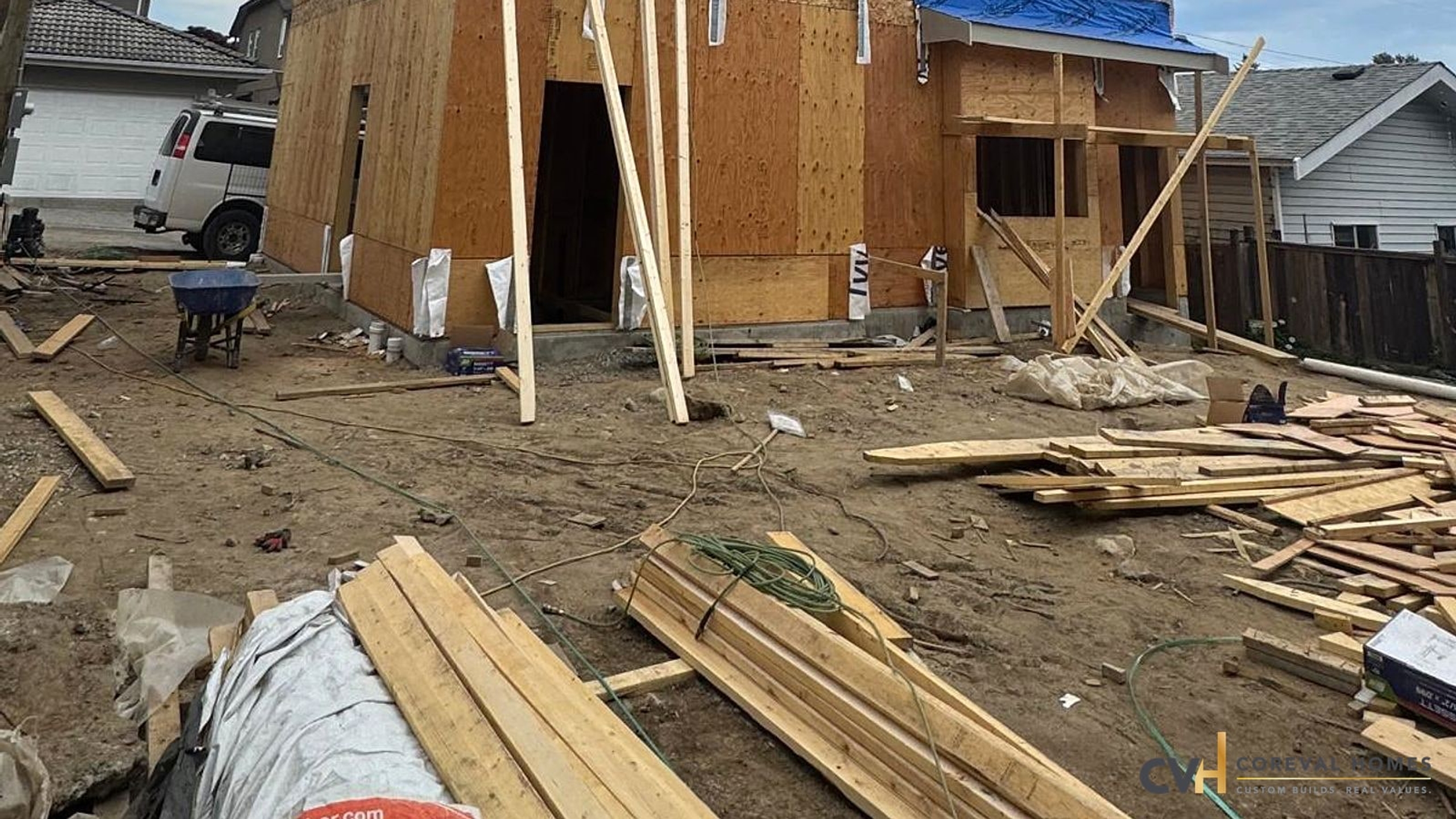
- In Metro Vancouver, the site can change the budget before the finishes do. Slope, trees, rock, soft soils, lane access, stormwater, utilities, and staging all matter.
- Start with the address, zoning, survey, and site review before you trust any number.

What is the real cost to build a house in BC in 2026?
The real cost to build a house in BC in 2026 depends on the property first, then the house.
A useful early benchmark is Altus Group's 2026 Canadian Cost Guide. It lists Vancouver hard construction costs of $490 to $1,250 per square foot for a custom-built single-family home and $200 to $315 per square foot for a single-family home with an unfinished basement. Those are hard costs only: the guide excludes taxes and site development. That makes the numbers useful for early planning. They are not a full project budget, and they are not a quote for a specific lot.
These figures are based on Altus Group market data and represent industry averages. Actual costs vary based on project scope, materials, and site conditions. Contact CoreVal Homes for a personalized assessment.
The full budget needs more than the house shell. It may include survey work, architectural drawings, structural engineering, energy modelling, mechanical design, civil design, arborist reports, geotechnical review, demolition, hazardous-materials testing, permit fees, Development Cost Levies, utility upgrades, new home warranty, insurance, GST, financing costs, landscaping, fencing, appliances, window coverings, and contingency.
That is why two homeowners can hear the same cost-per-square-foot range and still end up with very different budgets.
A flat serviced lot in Langley is not the same project as a hillside property in North Vancouver. A teardown in East Vancouver is not the same as a custom home in Point Grey, Kerrisdale, or Shaughnessy. A laneway home in Kitsilano has different cost pressure than a detached home in South Surrey.
At CoreVal Homes, the useful first question is not, “What does a house cost per square foot?” The better question is, “What does this address need before it can be built properly?” If you are planning a ground-up home, start with a site-specific review through CoreVal’s custom home build process before you treat the floor plan or finish package as final.
Why does the cost to build a house in BC vary so much?
The cost varies because BC has one province-wide housing discussion, but it does not have one build condition.
Vancouver, Burnaby, Richmond, North Vancouver, West Vancouver, Coquitlam, Surrey, Langley, Delta, and Abbotsford each have their own zoning rules, tree bylaws, fee schedules, drainage standards, inspection processes, and servicing rules. Even within one city, two lots on the same block can price differently if one has slope, poor access, a large protected tree, old services, or a tight excavation area.
Several third-party data points explain why old budget assumptions are weak in 2026:
- Altus Group's 2026 Canadian Cost Guide gives Vancouver hard-cost ranges by building type, but those figures are broad planning ranges, not a site-specific budget.
- Statistics Canada’s Residential Building Construction Price Index tracks residential construction prices with 2017 as the base year, which shows why a pre-2020 budget should not be used as a 2026 planning number.
- CMHC housing-start data shows construction activity by market, which matters because active markets can affect trade availability, inspection timing, and material lead times.
- The 2024 BC Building Code took effect on March 8, 2024, so new projects need to be checked against current code rules.
- BC’s small-scale multi-unit housing rules required many local governments to update zoning bylaws by June 30, 2024. In many areas, the Province says zoning must allow three or four units on many formerly single-detached lots, and up to six units on some lots near frequent transit.
Those facts do not give one final price. They explain why a 2026 budget must be built from current rules, current market data, and the exact property.
What costs come before construction starts?
Pre-construction costs come before excavation. They are not extras. They are the work that makes the project legal, buildable, and priceable.
A serious BC home build may need a legal survey, site measure, zoning review, architectural plans, structural drawings, energy modelling, mechanical design, civil review, arborist report, geotechnical report, demolition plan, hazardous-materials report, and permit documents. Depending on the city, it may also need stormwater details, tree protection plans, service connection drawings, and energy code forms.
Older homes need special care before demolition or major renovation. WorkSafeBC’s asbestos guidance warns that many homes built before 1990 may contain asbestos in materials such as drywall compound, floor tiles, insulation, duct wrap, textured ceilings, roofing, siding, and other products. Testing is not a paperwork detail. If asbestos is found, proper abatement can affect the budget and the schedule before construction starts.
Municipal fees can be material too. In Vancouver, Development Cost Levies are tied to city policy, project type, area, and floor space. Other cities may charge different permit, servicing, drainage, and inspection fees. Some projects may trigger off-site work, such as a new driveway crossing, curb, sidewalk, sewer connection, water connection, stormwater work, or utility change.
CoreVal’s planning work treats these items as part of the budget picture, not afterthoughts. A low construction number can look attractive if pre-construction items are missing. It becomes less useful once real reports, city fees, and site needs appear.
What should be included in a real BC house build budget?
A real BC house build budget should separate direct construction cost from total project cost.
Direct construction cost may include excavation, foundation, framing, roofing, windows, doors, building envelope, plumbing, electrical, HVAC, insulation, drywall, cabinets, flooring, tile, painting, exterior work, cleanup, and site supervision.
Total project cost may include the direct build plus design, consultants, permits, demolition, hazardous-materials testing, abatement, municipal fees, Development Cost Levies, servicing, utilities, warranty, financing costs, GST, appliances, landscaping, fencing, window coverings, and contingency.
This matters because two bids can appear far apart when they are not pricing the same scope. One number may include site protection, realistic allowances, city-driven work, better documentation, and a proper contingency. Another may look lower because key items are excluded, carried as owner costs, or left as vague allowances.
Ask these questions before you compare numbers:
What drawings were priced? Has the site been reviewed? Is demolition included? Are permits included? Are municipal fees included? Is GST included? Are appliances included? Is landscaping included? Are utility upgrades included? What is excluded? What is an allowance? What could become a change order?
A clear written scope protects the owner and the builder. It also makes the cost-per-square-foot number less misleading.
How does the lot affect the cost to build a house in BC?
The lot can be one of the largest cost drivers in a BC home build.
A flat, clear, serviced lot is different from a sloped, treed, tight-access lot. A North Shore property with rock is different from a Richmond property with soft soils. A narrow Vancouver lot with lane access is different from a wider Fraser Valley lot with more staging room.
Key site factors include slope, rock, fill, soft soils, drainage, tree retention, lane access, overhead lines, sewer location, water service location, stormwater rules, demolition limits, neighbouring foundations, parking, excavation depth, and equipment access.
The foundation cannot be copied from one property to the next. A geotechnical review may change footing design, excavation depth, retaining walls, drainage, shoring, and backfill. A civil review may change stormwater planning or service routing. An arborist report may change the building footprint, driveway location, excavation plan, or utility path.
Access affects labour too. Tight lanes slow deliveries. Steep driveways limit equipment. Narrow lots may require more hand work and careful staging. If materials are hard to move, labour time rises.
This is why CoreVal looks at the address before treating a design as fixed. A home should be planned for the land, not forced onto the land after the budget is set.
How do permits change the cost to build a house in Vancouver?
Permits affect cost because they affect time, scope, financing, design, and risk.
In Vancouver, a new home may be reviewed through zoning, building, tree, drainage, sewer, and energy requirements. The City of Vancouver also has its own building bylaw, separate from the BC Building Code. A missing report, zoning conflict, tree issue, drawing mismatch, or energy documentation gap can slow the file.
Permit delay can carry real cost. Financing may sit longer. Trade schedules may shift. Work may move into a wetter season. Pricing may change before the project starts. If a permit package is weak, owners can feel pressure later when decisions should already be settled.
A permit-ready package should have aligned drawings, zoning checks, code review, structural coordination, energy documentation, consultant reports, and a clear scope. The documents should tell the same story.
Small-scale multi-unit housing has added another layer of planning. The Province’s small-scale multi-unit housing policy changed zoning expectations across many BC communities. That may create more housing options on some lots, but it does not remove site constraints. Trees, services, lane access, setbacks, parking rules, and city review still matter.
If you are considering infill housing, CoreVal’s laneway homes service can help assess access, privacy, utility connections, fire separation, storage, daylight, and permit path before the design gets too far ahead of the site.
How much do materials affect the cost of a BC custom home?
Materials affect both the project budget and the long-term comfort of the home.
The main categories are concrete, framing lumber, roof systems, windows, doors, cladding, insulation, drywall, plumbing, electrical, HVAC, cabinets, flooring, tile, paint, and exterior work. The finish package can then widen the range.
Cabinets, millwork, tile, flooring, plumbing fixtures, lighting, appliances, stairs, railings, fireplaces, exterior cladding, and landscaping materials can change the number quickly. A simple rectangular home with standard finishes is not priced like a complex home with large spans, premium windows, custom millwork, detailed cladding, and multiple roof lines.
Windows are a good example. Higher-performing windows can improve comfort, energy use, condensation control, and noise reduction. They can also affect lead times, wall details, flashing, and installation cost.
The building envelope matters in the Lower Mainland. Rain is part of the design problem. Flashing, drainage planes, cladding assemblies, roof overhangs, ventilation gaps, membrane details, and water management all affect the life of the house.
Mechanical systems matter too. A tighter home needs planned ventilation. A larger home needs heating and cooling sized to the actual design. The BC Energy Step Code measures energy performance through whole-building modelling and blower-door testing, so insulation, airtightness, windows, ventilation, and mechanical design need to work together.
The right material choice is not just about appearance. It needs to fit the climate, code, budget, schedule, and how the family will use the home.
How much does labour affect a house build in BC?
Labour is one of the largest variables in a BC home build.
A new home needs excavation crews, formers, framers, roofers, window installers, plumbers, electricians, HVAC technicians, insulation crews, drywall crews, finish carpenters, painters, tile setters, landscapers, cleanup crews, and site supervision.
When skilled labour is tight, sequencing matters more. If excavation is delayed, foundation work moves. If framing slips, window installation moves. If rough-ins start late, insulation and drywall move. If inspections fail, the schedule shifts again.
A strong build needs more than trades. It needs clear drawings, prompt decisions, timely material orders, clean site rules, and active supervision. Labour waste often starts when information is missing.
The lowest bid is not always the lowest final cost. A low number can become expensive if it causes rework, delay, disputes, weak documentation, or missing scope.
Homeowners should ask who supervises the site, how trade schedules are managed, how changes are priced, how allowances are tracked, and how inspection items are handled. Plain answers are a good sign. Vague answers are not.
How much does a laneway home cost in Vancouver?
A laneway home is smaller than a main house, but it is still a full home.
It needs design, permits, foundation work, structure, insulation, windows, plumbing, electrical, heating, ventilation, fire-safety details, utility connections, inspections, and warranty coverage. The smaller size does not remove the fixed work.
That is why a laneway home can cost more per square foot than a larger house. Kitchens, bathrooms, services, city review, site setup, and utility work are spread across fewer square feet.
Vancouver laneway projects also depend on the lane, tree protection, sewer location, drainage, access, and the relationship between the main house and the new building. Privacy, storage, daylight, sound control, and durable finishes matter if the home will be rented or used by family.
A laneway home can support rental income, aging parents, adult children, guests, or future flexibility. It can also add long-term value when the lot, layout, and permit path make sense.
The first step is not only asking whether a laneway home is allowed. The first step is asking whether the site can support one in a practical way. CoreVal’s laneway homes work starts with that fit check.
Is it cheaper to renovate or build new in BC?
Renovation can be cheaper, but it is not always lower risk.
A renovation keeps some of the existing structure. That can save money when the home has good bones, a workable layout, sound framing, dry assemblies, and services that can support the plan. But older homes can reveal major issues after walls, floors, or ceilings are opened.
Common risks include asbestos, lead paint, old wiring, weak framing, rot, poor insulation, old drain tile, settlement, undersized services, and previous unpermitted work. These items can affect both budget and schedule.
A new build gives more control. It allows a new structure, modern envelope, planned mechanical systems, better layout, and current code compliance. It also brings demolition, permits, site work, servicing, and full construction cost.
The right answer depends on the home and the goal. A solid house with a workable structure may suit a major renovation. A poor structure on a valuable lot may not. A family planning to stay long term should compare layout, comfort, energy use, risk, and resale.
If the existing home needs major structural work, layout changes, or a full interior rebuild, review CoreVal’s renovations service before deciding whether to renovate or rebuild.
What BC regulations affect the cost to build a house?
BC home building is regulated at the provincial and municipal level.
Start with the 2024 BC Building Code. It took effect on March 8, 2024, and sets rules for structure, fire safety, life safety, accessibility, energy performance, and building systems across most of BC. Vancouver has its own building bylaw, so Vancouver projects need a separate local check.
Municipal zoning comes next. Zoning controls use, height, setbacks, floor area, lot coverage, parking, and form. Vancouver, Burnaby, Richmond, North Vancouver, Coquitlam, Surrey, and Langley do not treat every lot the same way.
BC’s small-scale multi-unit housing rules also matter. The Province required many local governments to update zoning bylaws by June 30, 2024. In many areas, the policy allows three or four units on many lots that were once planned around one detached house. Near frequent transit, some sites may allow up to six units. The exact answer still depends on the city and property.
Warranty rules matter too. BC Housing describes the standard new home warranty as 2-5-10 coverage: two years for labour and materials, five years for the building envelope, and ten years for structure. Most new homes in BC need warranty insurance unless a legal exemption applies.
Energy rules can affect cost as well. Energy modelling, airtightness testing, insulation, windows, ventilation, and mechanical systems can all affect design and pricing.
Homeowners do not need to master every rule. They do need a project team that checks the rules early.
What questions should you ask before trusting a cost per square foot?
Cost per square foot is useful only when you know what is inside the number.
Ask whether the number includes demolition, excavation, servicing, consultant reports, municipal fees, GST, appliances, landscaping, fencing, utility upgrades, warranty, and contingency.
Ask whether the price assumes a flat lot, simple form, standard finishes, easy access, and normal servicing.
Ask what drawings were used. A number based on a concept sketch is not the same as a number based on permit drawings, engineering, specifications, and a site review.
Ask whether allowances are realistic. Cabinets, tile, flooring, plumbing fixtures, lighting, appliances, and exterior finishes should be clear enough to price.
Ask what is excluded. Exclusions are often where budget stress begins.
A square-foot price can help in early planning. It should not be treated as a final project cost until the scope, site, permit path, and finish level are clear.
How should you plan a house build budget without guesswork?
Start with facts before design taste takes over.
A working budget should include land facts, zoning, design intent, permit path, construction scope, risk allowances, and decision deadlines. It should separate must-have items from nice-to-have items.
A practical order looks like this: confirm zoning and allowed housing form, review the lot, check trees, slope, access, drainage, and services, identify required reports, build a permit-ready scope, price from drawings, flag high-risk items early, make finish choices after the structure is clear, keep decisions in writing, and carry a contingency.
The biggest budget mistake is designing beyond the site. A plan that fights slope, zoning, trees, structure, or servicing can become expensive before construction starts.
The second mistake is making decisions late. Late window choices, fixture changes, cabinet changes, and exterior finish changes can affect several trades at once.
CoreVal’s custom home build process is built around early clarity: site, scope, code, budget, then construction. That order gives owners a better chance of seeing the real cost before too much design money is spent.
What questions should you ask a BC custom home builder?
A good builder should answer specific questions in plain language.
Ask whether they have reviewed the exact lot. Ask what the main site risks are. Ask what permit path applies. Ask which reports are needed before submission. Ask what is included in the budget. Ask what is excluded. Ask how allowances are documented. Ask how changes are priced. Ask who supervises the site. Ask how trade schedules are managed. Ask what warranty coverage applies. Ask what decisions must be made before construction starts.
Listen for detail. A strong answer names the risk. A weak answer skips it.
Ask about local process as well. A builder who understands Vancouver, Burnaby, North Vancouver, Coquitlam, Surrey, and the Fraser Valley can often spot issues earlier than a team that treats every municipality the same way.
Documentation matters too. Written scopes reduce disputes. Clear change orders protect both sides. Good records make the build easier to manage.
The best builder is not the one who makes the project sound simple. It is the one who sees the hard parts early and plans around them.
How can CoreVal Homes help with the cost to build a house in BC?
CoreVal Homes builds custom homes, laneway homes, and renovations across Metro Vancouver.
For a new residence, CoreVal can help review the lot, define the scope, and move toward a permit-ready plan. For infill, CoreVal can assess whether a laneway home fits the property and the owner’s goals. For existing homes, CoreVal can help compare renovation value against rebuild risk.
The best time to call is before the design is fixed. Early builder input can catch site limits, code issues, material concerns, servicing questions, and schedule risks. It can also help match the plan to the budget before major design money is spent.
If you are weighing the cost to build a house in BC, do not start with a generic number. Start with the address, zoning, site, and goal. Then build the plan from the facts.
You can contact CoreVal Homes through the custom home build, laneway homes, or renovations pages, depending on the project type.
Test Your Knowledge
1. According to the article, what should homeowners look at first when estimating the cost to build a house in BC?
- ✅ A. The specific property and site conditions
- B. The colour of the interior finishes
- C. The number of bedrooms only
- D. The builder’s advertising materials
The article says the property comes first because slope, access, services, trees, soil, and other site factors can change the budget early.
2. How should the Altus Group Vancouver cost range be used?
- A. As a guaranteed final price
- ✅ B. As a broad planning benchmark
- C. As a permit fee calculator
- D. As a replacement for engineering review
The article says the Altus range is helpful for early planning, but it is not a complete budget or quote for a specific lot.
3. Why can two homes with the same square-foot estimate end up with different budgets?
Because the full cost depends on more than the house size. Lot conditions, city rules, servicing, permits, design work, fees, finishes, and contingency can all change the total.
4. What are a few extra costs that should be included in a real build budget beyond the house shell?
A real budget may include design, engineering, permits, demolition, utility upgrades, warranty, GST, financing, landscaping, appliances, and contingency.
Frequently Asked Questions
What is the average cost to build a house in BC in 2026?+
Why is building in Vancouver more expensive than in some other parts of BC?+
Does a laneway home cost less than a custom home?+
Is it better to renovate or rebuild in Metro Vancouver?+
What costs are often missing from early home build budgets?+
How much contingency should I plan for when building a house in BC?+
Who should I call before building a house in BC?+
Enjoying our articles? Stay informed on real estate & development.
Make us your preferred source on Google