

---
TL;DR
- Vancouver has permitted laneway houses since 2009; they are now allowed in the R1-1 zone that replaced the old RS zones in October 2023
- CMHC's 2025 Rental Market Report put Greater Vancouver's vacancy rate at 3.7%, up from 1.6% a year earlier, so size the rental case against current local rents
- Total project timelines realistically run 18–24 months from first consultation to occupancy permit
- Choosing builders without verifiable permit history and WorkSafeBC coverage introduces significant financial and legal risk, vet credentials before signing
- Metro Vancouver builders who understand municipality-specific zoning (Vancouver vs. Burnaby vs. North Vancouver vs. Coquitlam) deliver faster permitting outcomes
---
The Laneway House Opportunity in Metro Vancouver
Many single-family homeowners in Vancouver, Burnaby and on the North Shore own lots with room at the back for a second home.
If you own a single-family home with rear lane access, a laneway house may be possible on your lot.
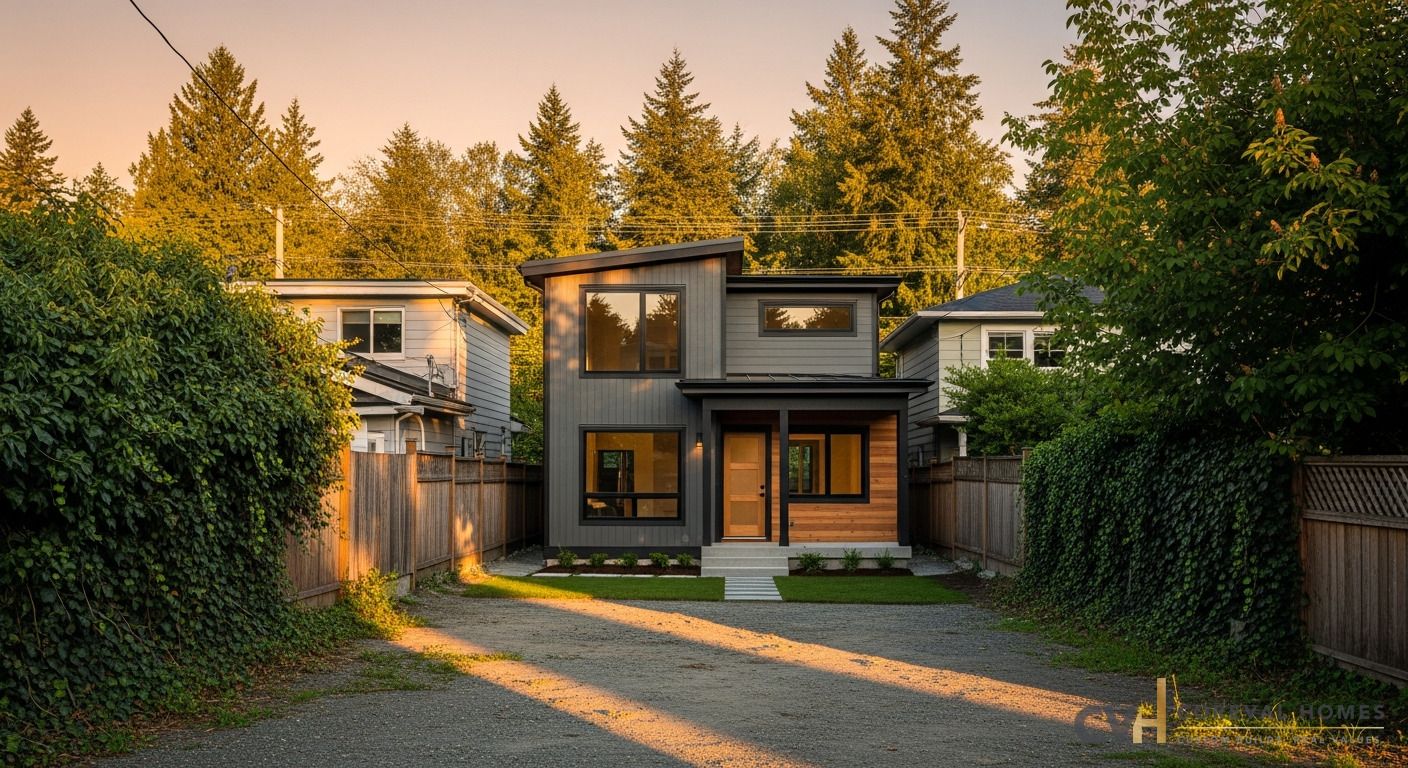
A laneway house is a fully detached secondary dwelling built in your backyard, accessed from the rear lane. Executed properly, it generates measurable rental income and adds property value. Executed poorly, it becomes an over-budget, over-schedule burden.
This guide covers what actually determines eligibility, the real permit timeline, reliable cost benchmarks, and the specific questions every homeowner should ask before committing to any builder.
---
Why Metro Vancouver Homeowners Are Building Laneway Houses in 2026
The Rental Income Case
Vancouver's rental market is operating under constraint.
CMHC's 2025 Rental Market Report showed Greater Vancouver's purpose-built vacancy rate more than doubling, from 1.6% to 3.7%, the highest in more than 30 years. Tenants have more choice than they did a year earlier, so a laneway home has to compete on finish, privacy and location.
Price your rent against current listings for comparable units in your neighbourhood, not a regional average.
The Regulatory Tailwind
Policy is moving in the same direction. The City of Vancouver has been refining its laneway house rules since the program launched in 2009. Provincial legislation, Bill 44, passed November 2023, requires most BC municipalities to permit small-scale multi-unit housing on single-family lots.
Laneway homes fit squarely within that framework. The regulatory environment is becoming more permissive, not more restrictive.
---
Does Your Lot Qualify? The Hard Technical Requirements
Not every lot works. Here's what actually determines eligibility. We run site assessments on these requirements before design begins.
Zoning and Lane Access
The City of Vancouver allows laneway houses in its R1-1 Residential Inclusive zone, which replaced the old RS zones on October 17, 2023. Most single-family lots in East Van, Sunset, Kensington-Cedar Cottage, Kerrisdale, Hastings-Sunrise and South Cambie now fall under R1-1.
Fundamental requirement: your lot must have rear lane access. This is not a formality. Laneway means lane. Absence of a lane means no laneway house.
Lot Width
Section 11 of Vancouver's Zoning and Development By-law sets the laneway house requirements, including minimum site dimensions.
Confirm your actual lot dimensions before hiring a designer.
Maximum Floor Area
The maximum floor area for a Vancouver laneway house is calculated relative to your lot size under Section 11.
Height Limits
Height limits are also set in Section 11, and they constrain second-floor livability, so understand them early in design.
Municipal Variation, The Hidden Complication
Here is where many projects derail: the rules are completely different in surrounding municipalities.
Burnaby now uses a single R1 Small-Scale Multi-Unit Housing District, in effect since July 1, 2024, with its own density, setback and height rules. The City of North Vancouver and the District of North Vancouver each maintain separate bylaws, and Coquitlam, Port Moody and Port Coquitlam operate under their own infill housing rules.
A builder who knows only the City of Vancouver's rules will submit applications to Burnaby using Vancouver guidelines. Rejection. Revision loop. Months lost.
Start with a site-specific zoning assessment from someone who knows the actual municipality where your lot sits.
---
The Vancouver Laneway House Permit Process: What Actually Happens
Most builders quote 12-month timelines. That assumes perfect execution. Real projects rarely deliver that.
Design Phase: 2–4 Months
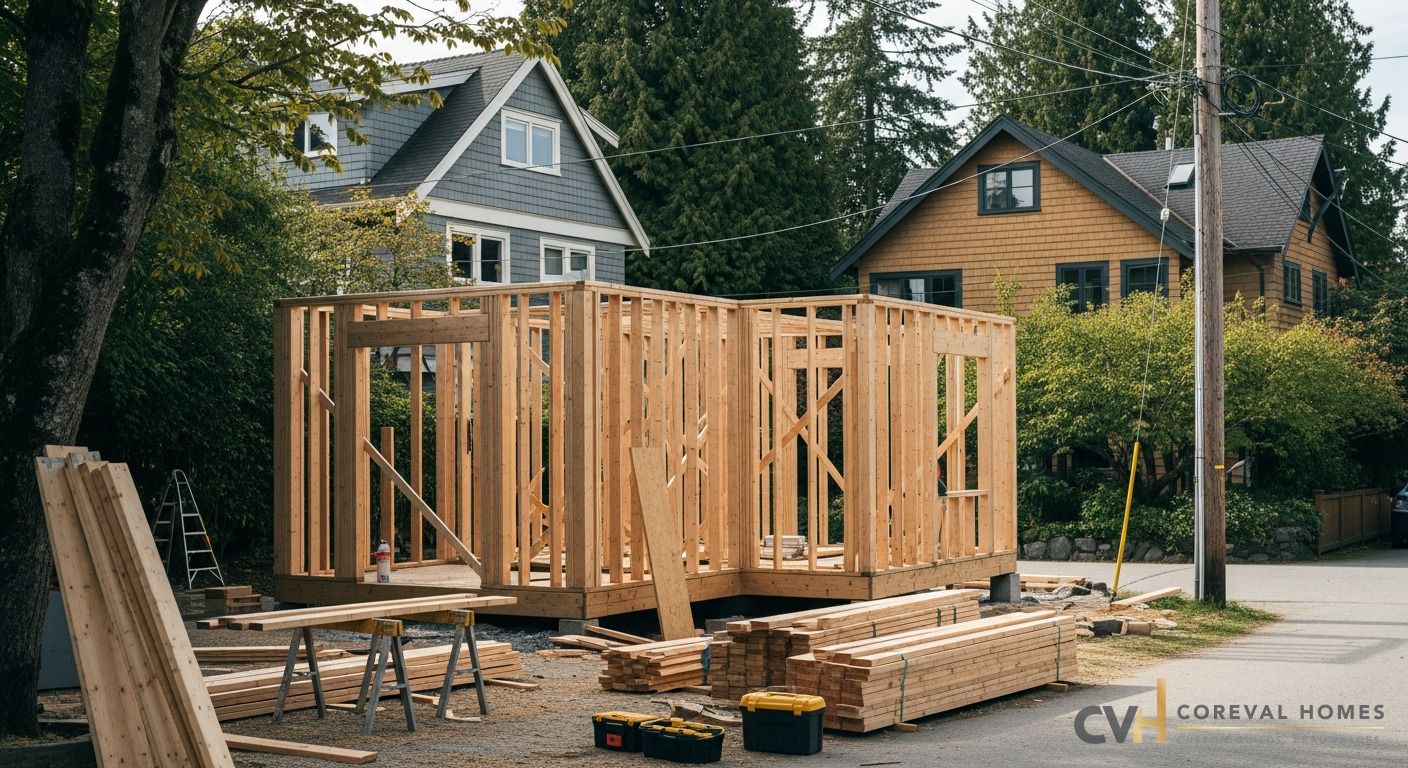
Before any permit application, you need permit-ready drawings, not sketches, but complete architectural documents showing floor plans, elevations, building sections, site coverage calculations, setback compliance, and energy performance modeling.
In Vancouver, energy requirements come from the Vancouver Building By-law, which aligned with EL-4 of the BC Zero Carbon Step Code on March 1, 2025, for new 1- to 3-storey homes on the performance path. Your drawings must show how the design complies.
Incomplete drawings get rejected by the City. Every rejection adds months.
Permit Review
Once the City of Vancouver's Development, Buildings and Licensing (DBL) department receives your application, it enters the review queue.
Processing times change with application volume and how complete the application is, so ask the City for current timelines before you set a schedule.
You wait. You cannot break ground. Time passes.
Most homeowners fail to budget for this phase, both financially (carrying costs, construction financing delays) and psychologically.
Building Permit
After your development permit issues, you apply for the building permit. This phase requires structural drawings, energy compliance confirmation, and satisfaction of any conditions the City attached to your development permit.
Development cost levies are collected at this stage. Under the City of Vancouver's August 2026 Development Cost Levies bulletin, City-wide levies for residential development at or below 1.2 FSR and laneway houses total $81.13 per square metre of floor area ($7.53 per square foot).
On a 700-square-foot laneway house, those City-wide levies work out to roughly $5,270 before any other charges.
Construction: 8–14 Months
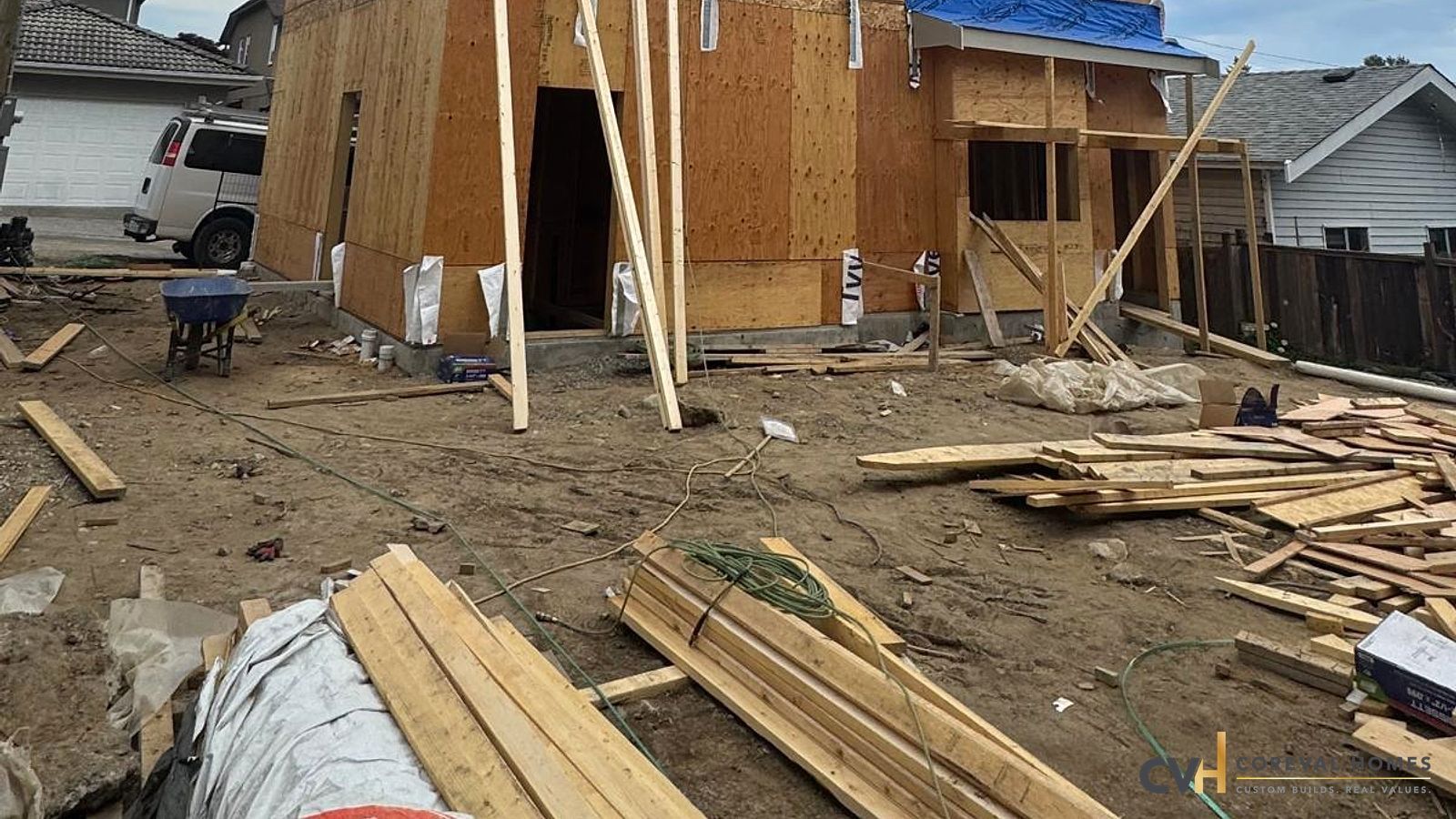
A well-managed build with a reliable general contractor runs 8–14 months. That covers excavation, foundation, framing, mechanical rough-in, electrical work, insulation, drywall, finishing, cabinetry, fixtures, and city inspections at each stage.
Variables that extend timelines: complex soil conditions, sub-trade scheduling conflicts, material lead times, weather stoppages.
Total Timeline: 18–24 Months
From first site assessment to occupancy permit, plan for 18–24 months. Homeowners who budget 12 months often find themselves disappointed by month 15. Set honest expectations from the start.
---
How Much Does a Laneway Home Actually Cost to Build?
Every project is different, lot conditions, soil type, utility tie-ins, design complexity, finish level. Anyone quoting a firm price without seeing your lot and drawings is speculating.
Third-party benchmarks help you test a quote.
Hard Construction Costs
Altus Group's cost guide doesn't have a laneway-home category. Its 2026 guide lists Vancouver hard construction costs of $490 to $1,250 per square foot for a custom-built single-family home and $200 to $315 per square foot for a single-family home with an unfinished basement, which shows the spread between simple and custom construction.
Soft Costs, The Often-Missed Line Item
Architectural drawings, engineering, permits, DCLs, project management, utility connection fees and landscaping all come on top of hard construction costs. Many homeowners discover these only after committing to hard costs.
Total Project Cost Range
Total cost depends on your lot, design and finishes. Lower quotes exist. They usually reflect lower-quality sub-trades, cut corners on insulation or waterproofing, or soft costs that emerge later as surprises.
These figures are based on Altus Group market data and represent industry averages. Actual costs vary based on project scope, materials, and site conditions. Contact CoreVal Homes for a personalized assessment.
---
What Every Homeowner Should Ask Builders Before Signing
Price is the last question you should ask. Here's what actually separates builders who deliver from those who don't.
Can You Show Your Permit History?
An established builder has a track record of permits issued and occupancy certificates granted. Not just completed-project photos, permit numbers you can verify.
The City of Vancouver maintains a publicly accessible permit portal. Look up the permits. Confirm they exist and closed with occupancy approval.
A builder who cannot provide permit references is not established.
Do You Carry WorkSafeBC Coverage?
WorksafeBC clearance is not optional on BC construction projects. If a worker is injured on your property and the contractor has no coverage, you face potential liability.
Request a current clearance letter before work begins. Verify it directly with WorkSafeBC.
Who Are Your Sub-Trades?
Framing, plumbing, electrical, HVAC, these require licensed trade contractors. Ask the builder to identify them.
Established long-term relationships with reliable sub-trades signal a serious operation. Random lowest-bid hiring per project is a red flag.
How Do You Handle City Re-submissions?
They happen on most projects. It's not failure, it's process. How a builder responds tells you everything about how they'll manage your project.
Experienced builders have clear protocol. Evasion usually means inexperience.
What Does the Contract Say?
Read it carefully. Look for: detailed scope of work with explicit inclusions/exclusions, payment schedule tied to construction milestones (not calendar dates), change order protocol with pricing, timeline commitments, and warranty terms.
A clear contract protects both parties. A vague contract protects no one.
---
The Most Expensive Mistakes Homeowners Make
These errors repeat across the Metro Vancouver laneway market. We've seen them derail projects.
Selecting the Lowest Bid
The cheapest builder is cheap for a reason. Under-priced sub-trades. Cut corners on insulation and waterproofing. Permit submissions with sloppy drawings that bounce back for revision. You discover problems six months into construction, or years later when moisture damage appears in the walls.
A competitive quote from an established builder is reasonable. A dramatically low quote is a warning signal.
Starting Design Before Confirming Zoning
Paying for architectural drawings before confirming the lot has lane access and meets the zoning rules is money you may not get back.
A 20-minute conversation with a qualified builder costs nothing. It can save months and thousands of dollars.
Underestimating Soft Costs
Design, permits, DCLs, engineering, project management, landscaping and utility connections all come on top of hard construction costs.
Homeowners who budget only for "the build" get hit hard during the permit phase. Demand a full soft cost estimate before committing.
Ignoring the Landlord-Tenant Reality
A laneway home is a rental relationship. Lease terms, utility billing, parking, noise, privacy, maintenance access, these are permanent design decisions made during construction, not after.
Think about where utility meters sit. How private is the entrance? Does the layout support a functional tenancy?
Building without thinking through the landlord-tenant dynamic creates friction that affects rental income and your daily life.
Skipping Assessment of the Main House
Some homeowners start a laneway build without addressing deferred maintenance on the main house. Combining projects can save on mobilization costs and minimize site disruption. It's worth a conversation before starting.
---
FAQ
What is a laneway house in Vancouver?
A laneway house is a fully detached secondary dwelling built at the rear of a single-family residential lot, accessed from the back lane. The City of Vancouver formally permitted them starting in 2009 (the old RS zones are now R1-1). They function as independent units with separate entrances and utilities.
How do I know if my lot qualifies?
Start with three checks: your zoning (in Vancouver, R1-1 for most former single-family lots), rear lane access, and the site dimensions required under Section 11 of the Zoning and Development By-law. Your lot must also meet setback and floor area limits. A site-specific assessment with a qualified builder, or an inquiry to the City's development information office, is the fastest first step.
How long does the full process take?
Plan for 18 to 24 months from first site assessment to occupancy permit, covering design, permit review, the building permit and construction. Permit review times change with application volume, so confirm current timelines with the City.
What is the difference between a laneway house and a coach house?
The terms are often used interchangeably. Technically, a laneway house is specifically accessed from the rear lane. A coach house may be accessed differently. The City of Vancouver uses "laneway house" as the formal designation. Surrounding municipalities use different terms under their own bylaws.
Can I rent my laneway home immediately after construction?
Only after a valid occupancy permit has been issued by the City. Occupying or renting an unpermitted structure violates bylaw and creates serious liability. The occupancy permit is issued after a final city inspection confirming the completed build meets all code requirements. Get the signed permit in hand before any tenant moves in.
How does the rental income compare to other Vancouver investments?
It depends on your build cost, current rents and vacancy. Divide your realistic net annual rent by your total project cost to compare it with other uses of the money, and remember the unit also becomes part of your property's assessed value.
---
Your backyard may represent significant unrealized property value. Contact CoreVal Homes for a free site assessment and permit feasibility review. Request our permit history, WorkSafeBC clearance, and a detailed cost estimate before committing.
Related: custom estate builders in greater Vancouver · Coach House · carriage house builders in Vancouver
Enjoying our articles? Stay informed on real estate & development.
Make us your preferred source on Google